السلام علیک یا فاطمة الزهراء (س)
الّلهُمَّ صَلِّ عَلی مُحَمَّد وَآلِ مُحَمَّد وَعَجِّل فَرَجَهُمالسلام علیک یا فاطمة الزهراء (س)
الّلهُمَّ صَلِّ عَلی مُحَمَّد وَآلِ مُحَمَّد وَعَجِّل فَرَجَهُم
The reason the Karbala martyrs are so great ...
In the Name of Allah, the Merciful, the Most Merciful
Sura 21: AL-ANBIYA (THE PROPHETS) - Juz' 17 - Translation Qarib
**************
Note: All content is free to use
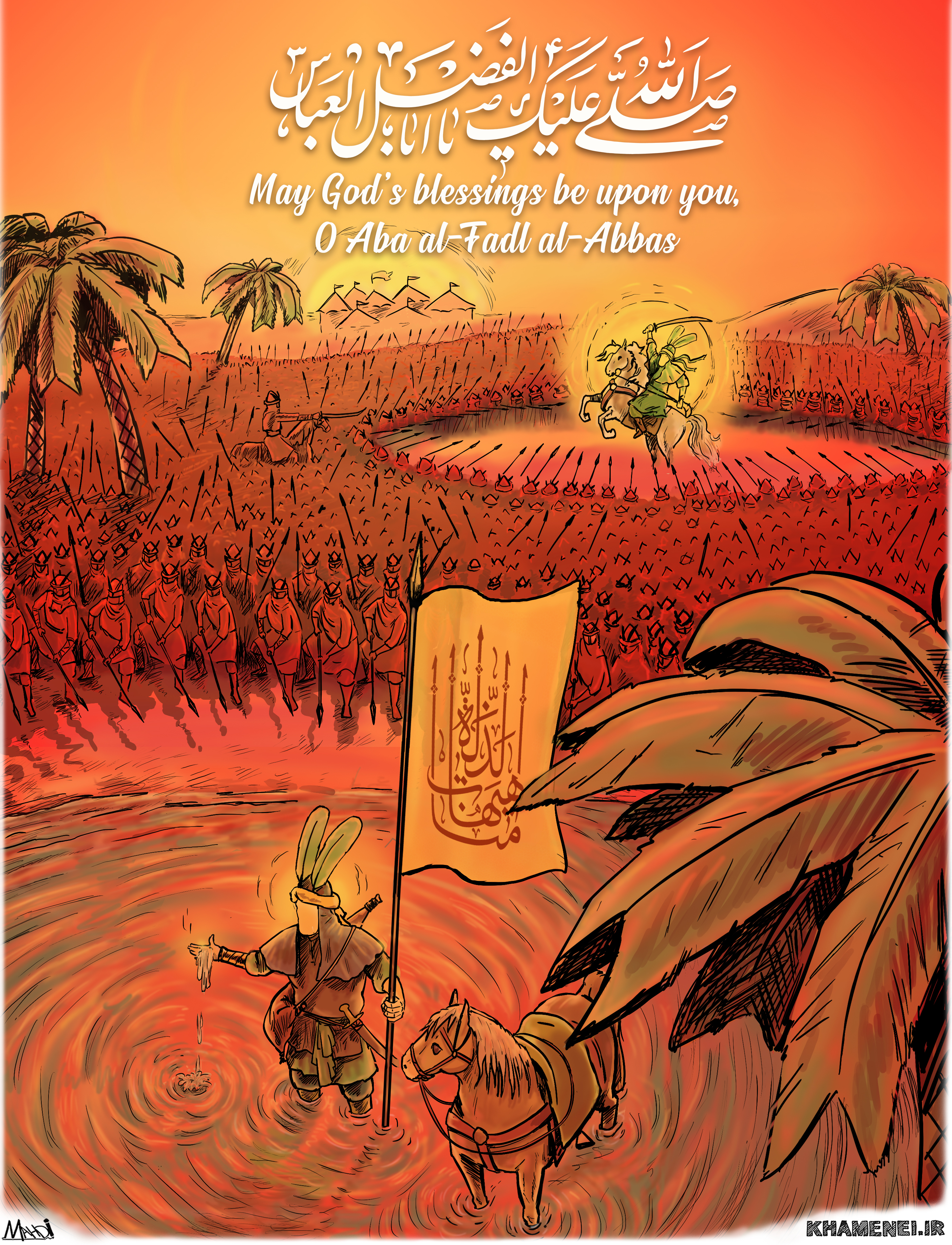
Why are Hazrat Abbas's (pbuh) sacrifices so valuable?
Imam Khamenei:
Abbas Ibn Ali's value resides in his jihad, self-sacrifice,
devotion and knowledge of Imam of his time. His significance is his patience and
endurance, his refusal to drink water while dehydrated; standing over the river
without any religious or customary prohibitions for ingesting water. The value
of those martyred at Karbala resides in the reality that they safeguarded a just
cause, in the most difficult conditions anyone could imagine.
Some people are ready to fight in a great, lost war and perhaps perish in the
heat of the battle, which is indeed a highly ranked position. Yet, not everyone
is ready for such a sacrifice, since martyrs and those who fight on the path of
God are numerable. Praise Be to God, during our war, we had outstanding martyrs.
However, becoming martyred on that battlefield was very different from being
martyred on the battlefield of Karbala, especially with a feeling of loneliness,
pressure, thirst and threats or harassment that plagued one's family.
One may often say, “I am ready to die on this battlefield, but it’s not possible
because my child will go hungry or lacks medicine”, it becomes a justification.
Sometimes, individuals care more about their families than they care about
themselves. They care about their infant more than self. Imagine men going to
the battlefield with an infant, wife, mother or the entire family; while all of
them are exposed to this danger one must prevent the weakness of his resolve.
The significance of Abbas Ibn Ali, Habib Ibn Mazahir and John Bin Huwai resides
in this persona, not in their height or muscular built. There are many people in
this world who are equal of height and many people of muscular stature, but this
is not a spiritual significance.
Imam Khamenei, [July 27, 2005]
Why can Abbas (a.s.) make the world passionate about him?
Imam Khamenei:
Abal-Fadhl Al-Abbas's value derives from his selfless endeavor, self-sacrifice,
sincerity, and loyalty to the Imam of his time; his nobility originates from his
patience and resistance; it arises from his refraining to drink water while he
was thirsty and standing by the river [in respect and sympathy for his
companions who were thirsty].
Shi’a traditions are at the pinnacle of excellence. Our Shi’ite principals
persuaded a Western philosopher, who grew up familiar with Western concepts of
philosophy, like Henry Corbyn, to sit attentively in front of Allameh Tabatabai.
He felt humbled before this wisdom and thereafter became a Shi’a disciple who
promotes Shi’a principlas in Europe. Shi’a traditions can be taught at all
echelon, ranging from an average intellect to the highest rank of philosophers.
Abbas Ibn Ali's value resides in his jihad, self-sacrifice, devotion and
knowledge of Imam in his time. His significance is his patience and endurance,
his refusal to drink water while dehydrated; standing over the river without any
religious or customary prohibitions for ingesting water. The value of those
martyred at Karbala resides in the reality that they safeguarded a just cause,
in the most difficult conditions anyone could imagine.
Some people are ready to fight in a great, lost war and perhaps perish in the
heat of the battle, which is indeed a highly ranked position. Yet, not everyone
is ready for such a sacrifice, since martyrs and those who fight on the path of
God are numerable. Praise Be to God, during our war, we had outstanding martyrs.
However, becoming martyred on that battlefield was very different from being
martyred on the battlefield of Karbala, especially with a feeling of loneliness,
pressure, thirst and threats or harassment that plagued one's family.
One may often say, “I am ready to die in this battlefield, but it’s not possible
because my child will go hungry or lacks medicine”, it becomes a justification.
Sometimes, individuals care more about their families than they care about
themselves. They care about their infant more than self. Imagine men going to
the battlefield with an infant, wife, mother or the entire family; while all of
them are exposed to this danger one must prevent the weakness of his resolve.
The significance of Abbas Ibn Ali, Habib Ibn Mazahir and John Bin Huwai resides
in this persona, not in their height or muscular built. There are many people in
this world who are equal of height and many people of muscular stature, but this
is not a spiritual significance.
~Ayatollah Khamenei, July 27, 2005
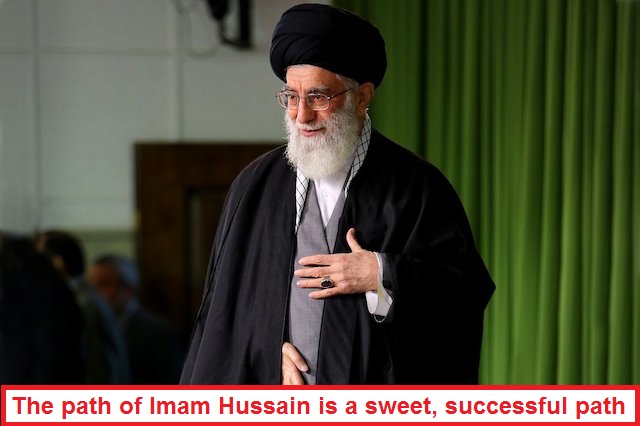
The path of Imam Hussain is a sweet, successful path
Imam Khamenei:
The 40 day period from Ashura to Arbaeen is one of the most important periods in the history of Islam. The day of Ashura is the peak of importance, and these 40 days between Ashura and Arbaeen are similar to the day of Ashura. If the day of Ashura is the peak of endeavor accompanied by sacrifice – the sacrifice of one’s life, loved ones, children and companions - then these 40 days are the peak of endeavor accompanied by clarification, disclosure and explanation. If it had not been for those 40 days and if it had not been for the great movement of Zainab al-Kubra (peace be upon her), Hazrat Umm al-Kulthum and Hazrat Sajjad (peace be upon him), perhaps the phrase “to liberate your servants from ignorance and from being left to wander in the dark” would not have been realized. It was this great movement and the extraordinary patience of the Holy Prophet’s Household led by Zainab al-Kubra (peace be upon her) and Imam Sajjad (peace be upon him) that were able to make the event of Karbala immortal. Their clarification was complementary to that sacrifice in the true sense of the word ...
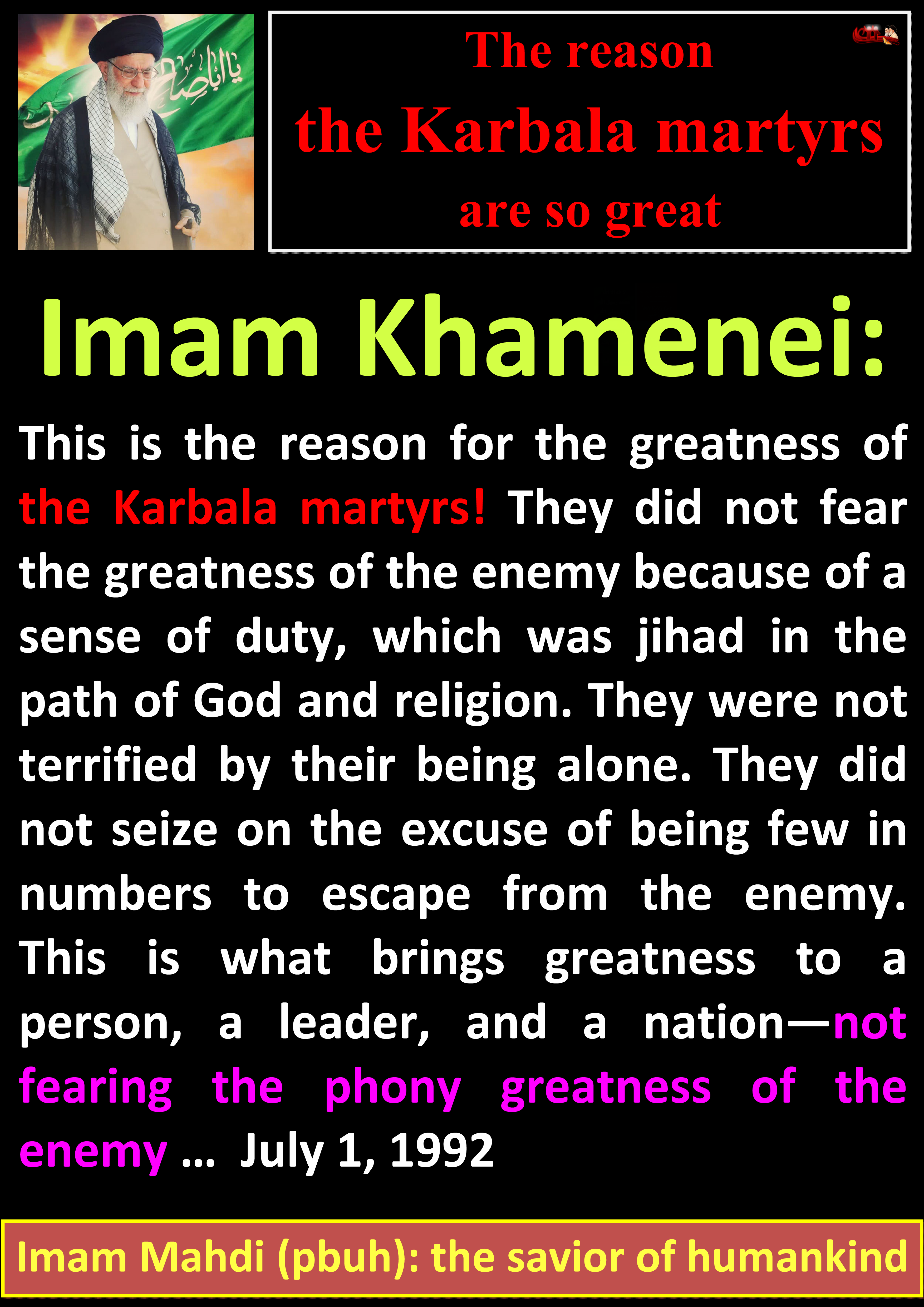
The reason the Karbala martyrs are so great
Imam Khamenei:
This is the reason for the greatness of the Karbala martyrs! They did not fear
the greatness of the enemy because of a sense of duty, which was jihad in the
path of God and religion. They were not terrified by their being alone. They did
not seize on the excuse of being few in numbers to escape from the enemy. This
is what brings greatness to a person, a leader, and a nation—not fearing the
phony greatness of the enemy.
Ayatollah Khamenei
July 1, 1992
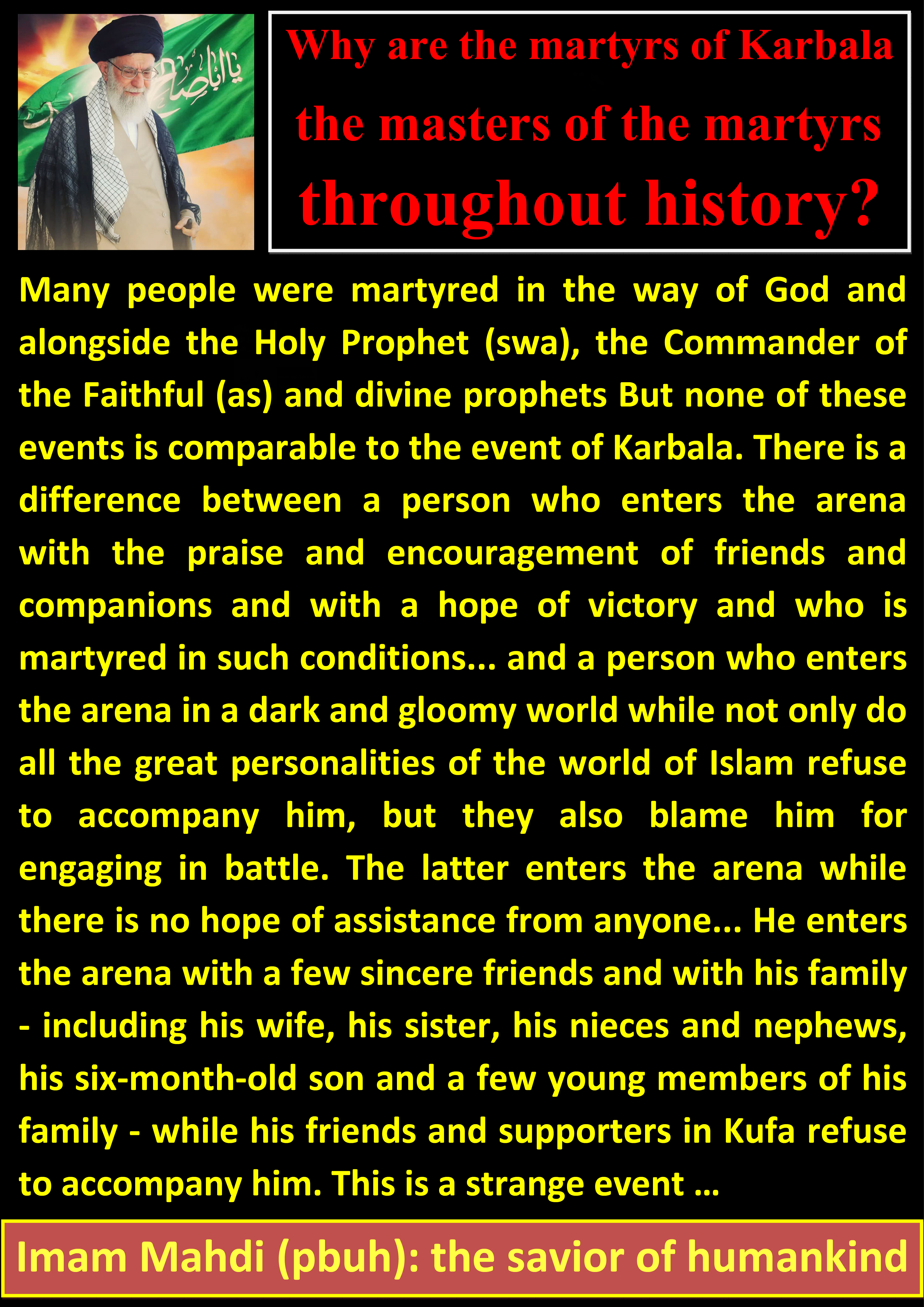
Why are the martyrs of Karbala the masters of the martyrs throughout history?
Many people were martyred in the way of God and alongside the Holy Prophet (swa), the Commander of the Faithful (as) and divine prophets But none of these events is comparable to the event of Karbala. There is a difference between a person who enters the arena with the praise and encouragement of friends and companions and with a hope of victory and who is martyred in such conditions... and a person who enters the arena in a dark and gloomy world while not only do all the great personalities of the world of Islam refuse to accompany him, but they also blame him for engaging in battle. The latter enters the arena while there is no hope of assistance from anyone... He enters the arena with a few sincere friends and with his family - including his wife, his sister, his nieces and nephews, his six-month-old son and a few young members of his family - while his friends and supporters in Kufa refuse to accompany him. This is a strange event.
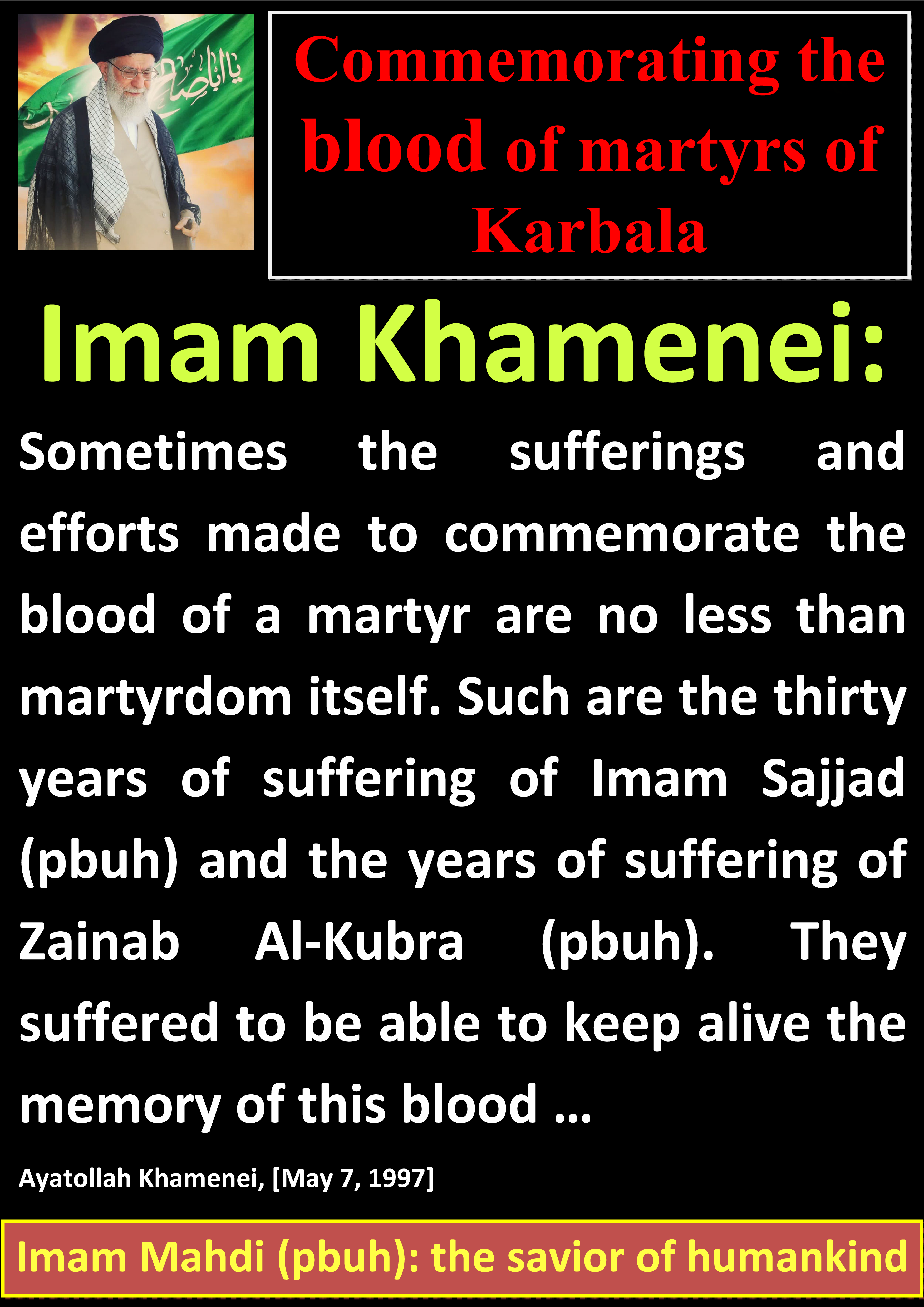
Commemorating the blood of martyrs of Karbala
Imam Khamenei:
Sometimes the sufferings and efforts made to commemorate the blood of a martyr
are no less than martyrdom itself. Such are the thirty years of suffering of
Imam Sajjad (pbuh) and the years of suffering of Zainab Al-Kubra (pbuh). They
suffered to be able to keep alive the memory of this blood …
Ayatollah Khamenei, [May 7, 1997]
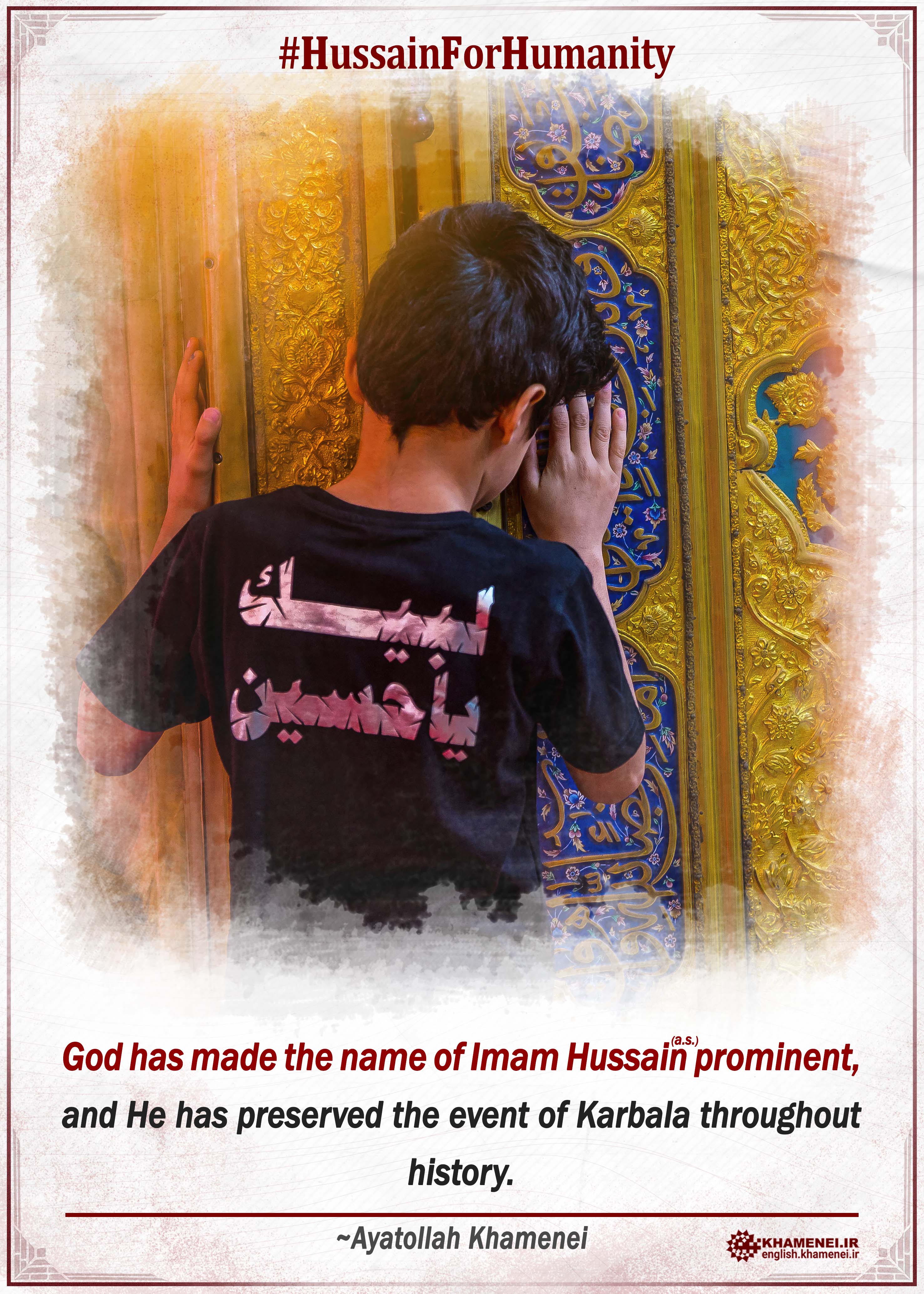
God has preserved the event of Karbala throughout history
Imam Khamenei:
We need to read between the lines, and carefully ponder over the life story of Hussain ibn-Ali (a.s.). Many have risen up in the world; they have had a leader, and they were also killed. Among them, numerous were children of the prophets and Imams (a.s.). However, Imam Hussain (a.s.) was unique. The event of Karbala was extraordinary. The martyrs of Karbala have a special position. Why? The answer is to be searched in the nature of the event, which gives a lesson to us all, including and maybe, in particular, to you, dear [disabled] war veterans.
One characteristic of the event is that Imam Hussain's movement was solely and truly for the sake of God, the religion and rectifying the society of Muslims. This first feature is very important. Imam Hussain (a.s.) stated: "I did not rise up [leaving my homeland] out of self-interest, for the sake of seeking pleasure, corruption or oppression;” —that is, it was not for swaggering, selling himself, desiring something for himself, or a pretentious spectacle. There was not even a bit of oppression or corruption in this movement. “I rise up only for the sake of rectification of the nation of my grandfather, the Messenger of Allah."-This is an extremely important point. The Arabic word used which means 'only' indicates that there is no other intention that can contaminate the pure intention and the sun-like mind of Imam Hussain (a.s.). When addressing the first Muslims of the early years of Islam, the Holy Quran states: "Do not be like those who marched out boastfully to show off their strength to people and hinder people from the way of God {Quran; 8:47}.” Here, Imam Hussain (a.s.) says: “I did not rise up out of self-interest or for the sake of seeking pleasure.”
These are two different manners, two different behaviors. The Quran reads: "Do not be like those who marched out boastfully”, arrogantly, and selfishly. It means that this kind of behavior lacks the purity of intentions. That is, in the movement of the corrupt approach, it is only self-centeredness that matters. “To show off”: This kind of a person adorns himself, rides an expensive horse, wears pieces of jewellery, recites arrogant chants, and comes out. Toward where? Toward the battlefield. The battlefield is where this person and many like him will die. Such a person rises up in this manner. There is nothing but arrogance in him.
This is one way [of coming out]. On the other side, the best example is Hussain Ibn Ali (AS) who is pure from any form of selfishness and is not after self-interest or personal, familial, or communitarian gains. This is the first characteristic of the movement of Hussain Ibn Ali (AS). The more selfless one is, the more value does he gain in what he does. The more one moves away from the peak of selflessness, the closer they get to the peak of selfishness, egotism, self-interest, personal and seeking familial gain and such which is a whole other spectrum. Between that pure selflessness and pure selfishness, there is a vast field. Going from one side of it to the other decreases the value of our work. It becomes less fruitful, and also less durable. This is an outcome of the matter. The more defective the product, the sooner it decays. If it is pure, it will never go bad. Giving you a physical example, a piece of 100% pure gold never decays. Nor does it rust. But the more copper, iron, and other cheaper elements are added to the alloy, the more it becomes prone to decay and destruction. This is a general rule.
This applies to what is tangible. But when it comes to spirituality, these equations are far more discerning. We do not understand it because of our materialistic and ordinary vision. Nonetheless, men of vision and understanding perceive. The Critic in this matter, the Goldsmith and the Jeweler, is God the Almighty. And for sure, the Critic sees well. If there is an ounce of impurity in our work, its value would diminish accordingly, and God would reduce its lasting effect.
God, the Exalted, is an insightful critic. The work of Imam Hussain (a.s.) is a work in which there is not even a slight hint of impurity. Hence, you see this quality achievement has lasted to this day and will last forever. Who could believe that after these people were killed in that desert far from their homes, while their bodies were buried there; with so much propaganda spread against them; all killed in such a heartless manner; their hometown of Medina put on fire even after their martyrdom (the story of Harra, which happened the next year); -- this rose garden was devastated, and the petals of roses were all thrusted, yet, later anyone would feel the aroma of the rosewater from this garden? According to which rule of nature, a petal of that rose garden can last so long in the nature? However, you view, the more time passes by, the more the aroma of that rose garden spreads. There are some people who do not believe that Prophet Muhammad (PBUH) is the grandfather of Imam Hussain (a.s.) and that he follows in his path; yet, they believe in Imam Hussain (a.s.)! Some do not believe in his father, Ali (a.s.), yet, they believe in Imam Hussain (a.s.)! They do not believe in God—the God Imam Hussain worshipped, yet, before Imam Hussain (a.s.), they are humble and respectful! This is the outgrowth of Imam Hussain’s purity.
January 16, 1994
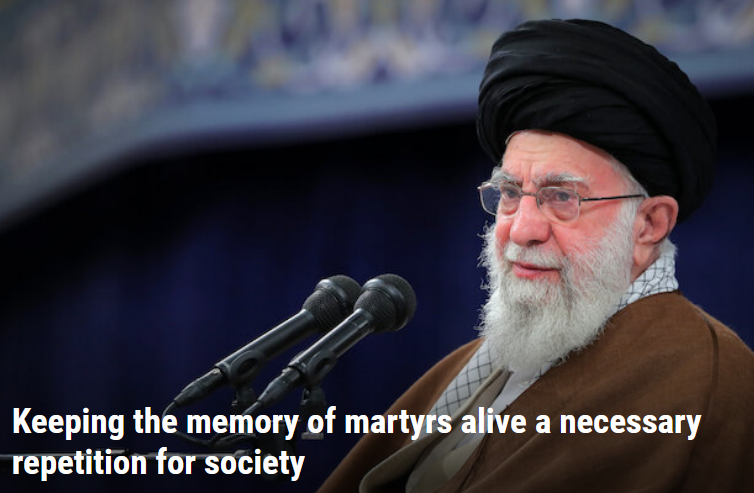
Keeping the memory of martyrs alive a necessary repetition for society
The following is the full text of the speech delivered by Imam Khamenei, the Leader of the Islamic Revolution, in a meeting with the organizers of the Congress for the Commemoration of the 10,000 Martyrs from the East Azerbaijan Province. This meeting took place in the Imam Khomeini Hussainiyah on December 6, 2023. The statements of Imam Khamenei were later published on December 14, 2023 at the place of this congress.
In the Name of God, the Compassionate, the Merciful
All praise is due to God, Lord of the Worlds, and peace and greetings be upon
our Master, Muhammad, and his pure Progeny, particularly the Remnant of God on
earth.
I would like to thank all the dear brothers and sisters here for this useful,
necessary action to keep the memory and names of the outstanding martyrs of
Azerbaijan and Tabriz alive. They are, of course, unforgettable. Once again you
have spoken about them in a better, higher, clearer fashion. What you did is
very good and very appropriate. Of course, there was a bit of a time gap between
the first commemoration ceremony, which was held several years ago, and this
commemoration ceremony. It is appropriate for these kinds of measures,
commemorations, tributes, and remembrances to be repeated more frequently, in
the same way that we honor the memory of the martyrs of Karbala every year
during the month of Muharram. That has been repeated over 1,300 years, and it is
not a mundane repetition. It is one of the necessary, useful repetitions for
today’s society and for the society of the future.
Well, there are plenty of admirable things to say about Tabriz and Azerbaijan,
and I have spoken about this many times during our annual meetings. Regarding
the martyrs, the statements of the respected Friday prayer leader and the
honorable commander of the IRGC today in this meeting were very good and
complete. Praise God, these gentlemen have paid attention to all of the
recommendations that I wanted to give and the ones I usually mention, and you
have taken action on many of them. Let me just say that one of our duties is to
be aware of ourselves, the identity of ourselves. The Iranian nation should not
forget its identity. If it forgets its identity, it will be harmed, it will be
slapped in the face, and fall behind.
Regarding those who have forgotten Almighty God, He says, “Do not be like those
who forget Allah, so He makes them forget their own souls” (Quran 59:19). They
forgot God, [so] God made them forget themselves. This shows that paying
attention to oneself, one's identity, and one's own characteristics is necessary
for every person, nation, and group. Azerbaijan must pay full attention to the
identity that has caused it to stand out. The place we call Azerbaijan truly has
an outstanding identity among the people of the Iranian nation.
Azerbaijan is the birthplace of martyrs and people who have sacrificed their
lives, and this is not just limited to the Sacred Defense. It was the same
before that, and it remains the same after that. With regard to matters related
to the event of the Islamic Revolution, if we are to look at it, the martyrs of
Azerbaijan started from before the Revolution. That is, from the beginning of
Imam Khomeini and the Iranian nation’s movement, the behavior leading to
martyrdom and the movement toward martyrdom in Azerbaijan began and has
continued up until today.
In the case of the Defenders of the Shrines, there are martyrs from Azerbaijan.
Of course, the peak of these sacrifices, the peak of showing the high value and
character of Azerbaijan, was seen during the Sacred Defense in the figures that
were mentioned, such as Martyr Mehdi Bakeri, Martyr Hamid Bakeri, Martyr
Tajallai, and Martyr Yaghchian. These were our great, distinguished brothers who
went to meet God. Praise God, there are other dear, prominent figures like them
as well today.
So, this characteristic of seeking martyrdom and the outstanding behavior that
was observed in their sacrifices is not limited to the Imposed War. This wasn’t
just during the Sacred Defense. This began before the Revolution and has
continued up until today. This city [Tabriz] has two martyred Friday prayer
leaders. In other words, out of the five Friday prayer leaders who were martyred
and who were among the best of our clerics in the country, two of them came from
the city of Tabriz. These things are very important.
What I am saying as a recommendation is that, first of all, do not let the
effervesce of the martyrs’ blood abate. Commemorating the martyrs should not be
limited to just reminiscing about them. The piety, the sacrifices, the bravery,
the shining gem within people like Martyr Bakeri, which drew them to the middle
of the field, for example, should be reflected and conveyed to the younger
generation to serve as role models for them.
Our youth crave role models. The best role models are these. Some nations, which
completely lack this or lack it to a great extent, create and make up their own
role models without them even existing. We have these role models before us.
Martyr Bakeri should not just be looked at on the battlefield. We should also
see what he was like behind the scenes of the battlefield. We should see what he
was like when he went to Tabriz University. We should see what activities he
took part in during the pre-revolutionary period. That spirit should be seen.
I met Martyr Mehdi Bakeri in Mashhad before the Revolution. He was a
high-spirited, enthusiastic, intelligent person who was well able to analyze
different events. That is what made him shine like that and draw people’s hearts
toward him during the Sacred Defense. This kind of spirit needs to be reflected.
If we make films, if we write books, and if we compile and publish books of
recollections about him, we must be careful to reflect his spirit in them. This
spirit is a constructive spirit. This is the first issue. Do not let the
effervesce of the martyrs’ blood abate.
As I mentioned at the beginning of my speech, make these like the mourning
ceremonies for Imam Hussain (pbuh). Every year during Muharram, when it’s
Ashura, it’s as though you are seeing Ashura before your eyes, the Ashura that
took place in the year 61 AH. The events are reflected, and the characters come
alive before the eyes of the audience. This must also take place with regard to
the martyrs of the Sacred Defense and the 10,000 martyrs you spoke about. This
is one point.
The second matter is that you should not forget the families of the martyrs.
Unfortunately, many of their parents have passed away. They have joined their
martyrs. Make use of the memories and accounts related by those who are
available, whether they are the wives of the martyrs, their parents, their
colleagues, or their friends.
For example, Martyr Bakeri had a large number of coworkers during the war.
Praise God, some of them are still alive, healthy, and prepared to talk about
the details of his life that they saw. Courage does not exist only in fighting
battles. Courage is needed in self-control, in speaking, in not speaking, in
forbearance, and in taking action. All of these things are very important. There
are some who had seen and known these martyrs personally. Make use of these
people. Interview them. Talk to them. The characteristics of the martyrs should
be recorded and recognized in the form of real documentation. This is another
matter.
Another issue is that when we are studying the martyrs, the foundation that
brought about their ascension should also be identified, that is, the people or
those who ignited the first sparks, such as Martyr Qazi Tabatabai. He ignited
the first spark and the first movement during the Revolution, for example, on
February 18, 1978. He was the one who took the first step, invited people to his
area and his mosque, and so on. So the foundation for these things must be
identified.
Why is it that after the events that took place in Qom, the next movement took
place in Tabriz and not in this city or that city? What feature do these people
have that allowed them to produce and raise these kinds of young people and to
bring forth these kinds of martyrs? These are very important matters. We are
talking about an ethnic identity, a national identity, a religious identity [,
etc.]
I once mentioned in a similar gathering of brothers and sisters from Azerbaijan
that the late Sattar Khan had a note in his pocket from the scholars of Najaf
during the Constitutional Revolution, the events that it involved, and the
actions he was taking at that time. He had consulted the scholars of Najaf and
asked them a question, and they had written their responses. So, he took action
based on this intention. This is very important. What is the foundation for a
move? This needs to be clear. This shows us that. If these things are done, then
the movement will continue.
I would like to refer to the second tactical airbase (Tabriz Air Base). Well,
the 31st Ashura Division clearly included individuals who truly shined. That
great movement of the planes, our fighters had carried out that great task in
the very first days of the war. Of course, they had taken off from the first
base and other bases, including the third and fourth bases. They did this during
the first week of the war, and I went to the Majlis [Iranian parliament] and
presented a report of this endeavor to the representatives in the Majlis.
These are noteworthy matters. They are extremely important, and God willing,
they should be preserved in people’s minds and recorded in the Iranian nation’s
historical memory. The most important thing that needs to be done is to record
these significant events, these influential, unique phenomena — events that are
unparalleled at times — in the Iranian nation’s historical memory.
Our youth and our teenagers should know these things. Of course, we have not
worked as hard as we should have, and many of our youth do not know about our
prominent figures. They are also unaware of many events. We need to share these
things, whether it is by way of official broadcasting outlets such as the IRIB,
etc., or by way of the devices and means that are available to people today.
I hope the Almighty God will grant all of you success so that you will be able
to complete this great task. God willing, in the future, the time gap between
these commemoration ceremonies and remembrances will be less than the time gap
that existed between today’s session and the previous commemoration ceremony.
May God’s greetings, mercy, and blessings be upon you.
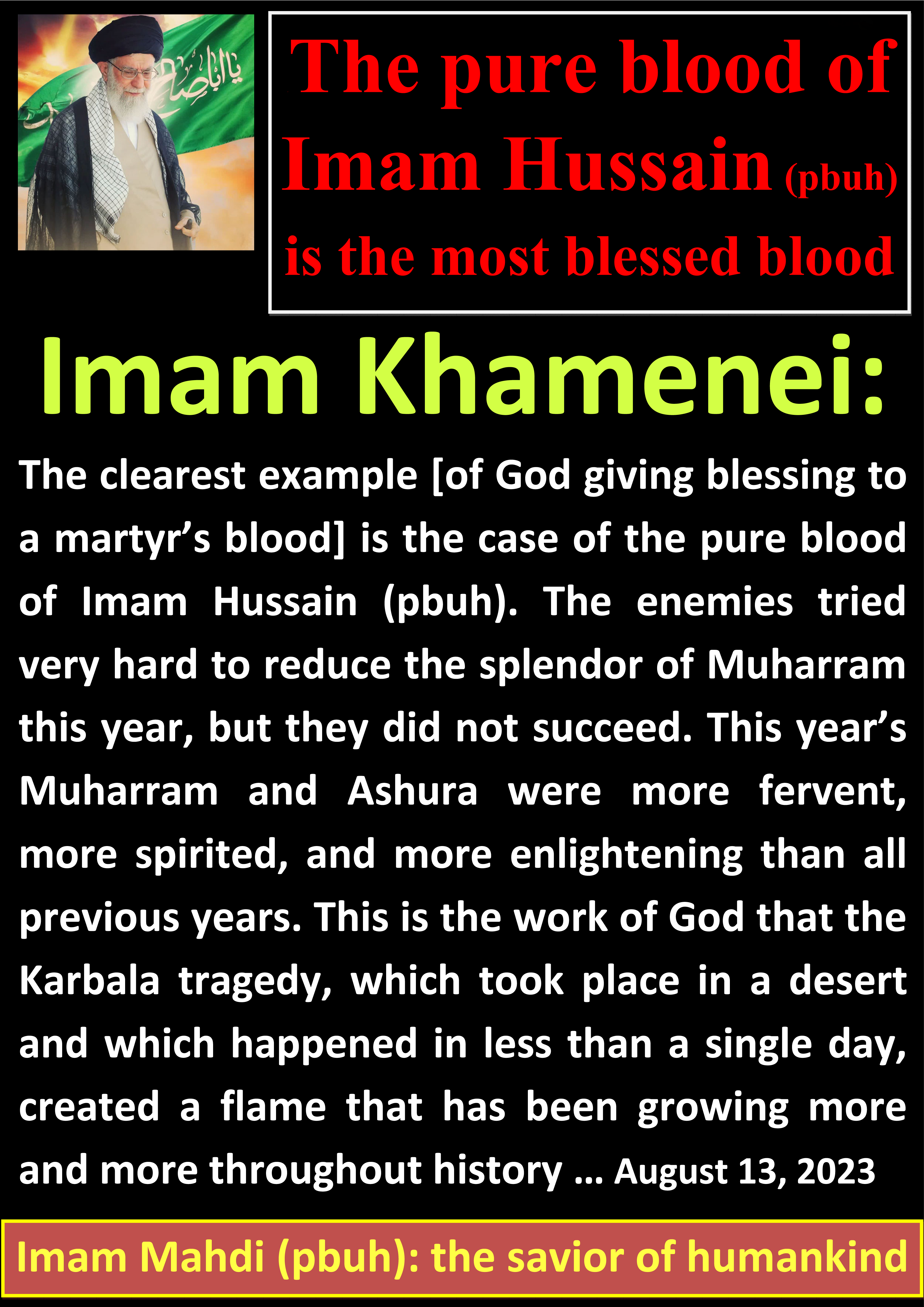
Imam Khamenei:
The clearest example [of God giving blessing to a martyr’s blood] is the case of
the pure blood of Imam Hussain (pbuh). The enemies tried very hard to reduce the
splendor of Muharram this year, but they did not succeed. This year’s Muharram
and Ashura were more fervent, more spirited, and more enlightening than all
previous years. This is the work of God that the Karbala tragedy, which took
place in a desert and which happened in less than a single day, created a flame
that has been growing more and more throughout history … August 13, 2023
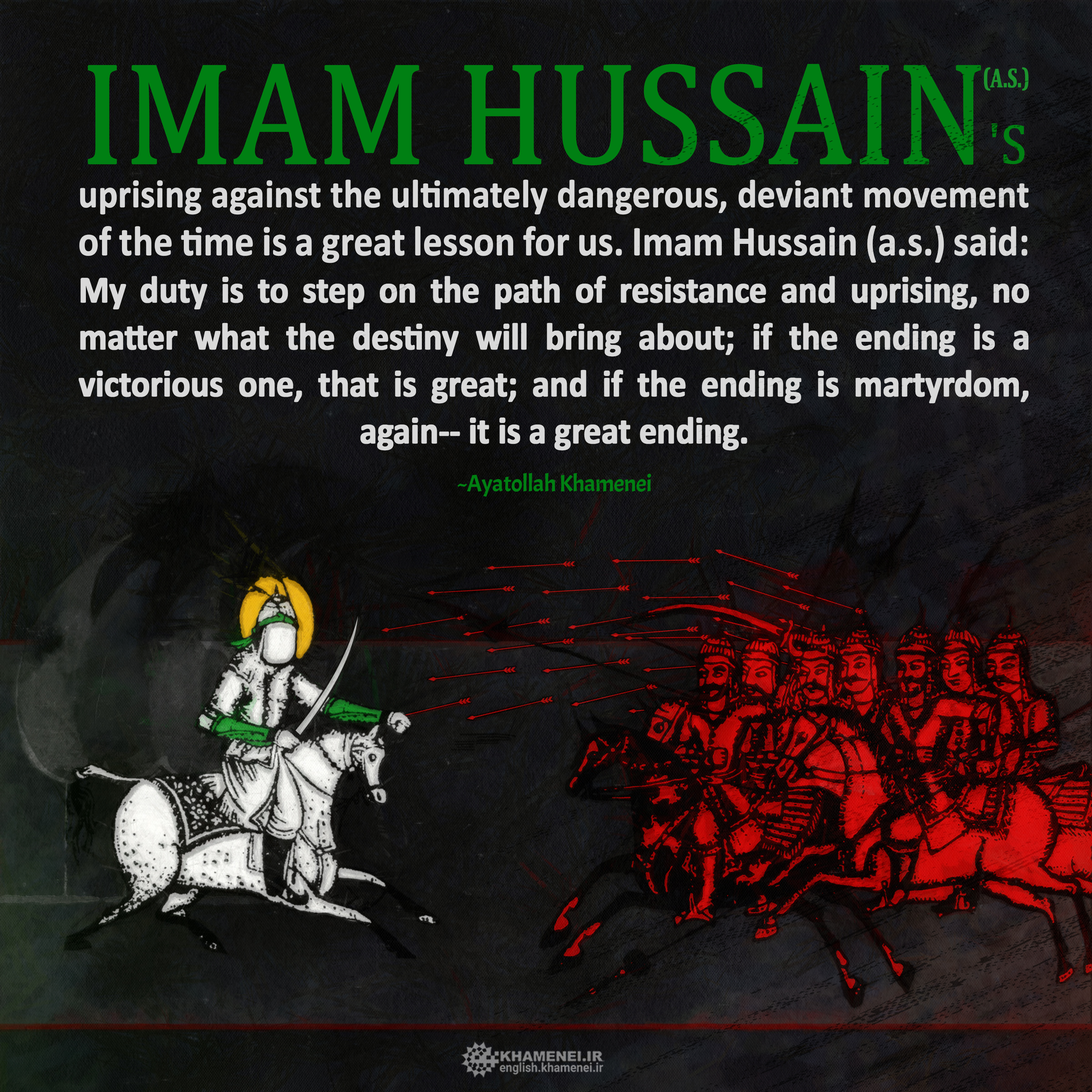
Imam Hussain’s movement, an instructive movement, a role model for nations ...
Imam Khamenei:
The concept of guardianship was embodied by Imam Hussain (a.s.) with all its
dimensions and with all the necessary and possible means. This is not to say
that others did not do such a thing or did not want to do such a thing, rather
it means that this movement was fully realized in the behavior of the Lord of
the Martyrs (a.s.) during his ten-year imamate. One can clearly notice in his
lifestyle all the methods that could have been used by a descendant of the Holy
Prophet (s.w.a.) to preserve the great legacy of Islam which has been passed
down by the Holy Prophet (s.w.a.) and his father as well as their genuine
followers. We can clearly see everything in the lifestyle of the Lord of the
Martyrs (a.s.) - everything ranging from clarification, to forewarning, to
promotion of Islam, to provoke the conscience of prominent figures of his time
during a sermon in Mina. All these things are tangible in the lifestyle of the
Lord of the Martyrs (a.s.). Later on, he stood up against a great deviation and
laid down his life. Imam Hussain (a.s.) was aware of the consequences of his
movement. He was an infallible Imam. Infallible Imams' extensive knowledge and
insight are beyond our heads. Imam Hussain (a.s.) revolted to set a role model
and he refused to surrender. He asked people to help him and when a group of
people from Kufa expressed their willingness to accompany him on this path, Imam
Hussain (a.s.) accepted their offer and moved towards Kufa and he did not give
up in the middle of the way. Imam Hussain (a.s.) stood up against the deviated
current of his time, which was extremely dangerous. And this became a lesson and
Imam Hussain (a.s.) himself makes the same point. That is to say, he backed up
his action with the order of Islam. He said that his duty was what he was doing.
He said that he had to express his opposition, no matter what the consequences
were. He said, "It is good if my destiny is a victory and if my destiny is
martyrdom, so much the better." This was how Imam Hussain (a.s.) acted.
This was a perfect instance of self-sacrifice and it safeguarded Islam. This
move preserved Islam. This move institutionalized values in society. If Imam
Hussain (a.s.) had not accepted this danger, if he had not made a move, if he
had not taken action, if his blood had not been shed, if those great tragedies
had not happened to the shrine of the Holy Prophet (s.w.a.), to Imam Ali's
(a.s.) daughter and to the Holy Prophet's (s.w.a.) descendants, this event would
not have gone down in history. The event that could have prevented that great
deviation had to shock people and history as much as the deviation did. This
shows Imam Hussain's (a.s.) self-sacrifice.
Of course, this is easier said than done. What Imam Hussain (a.s.) did was an
extraordinary feat. That is to say, the dimensions of his action are far more
than what we estimate. We usually ignore aspects and details. Once I spoke about
Imam Hussain's (a.s.) patience. His patience was not limited to enduring thirst
or seeing his companions being killed. These things are relatively easy to
tolerate. The kind of patience that is difficult to practice is to listen to
influential, aware and respectable people who keep creating doubts and telling
you that what you are doing is dangerous and wrong. Who did those things? People
like Abdullah Ja'far, Abdullah Zubair and Abdullah Abbas. These prominent
figures of that time were constantly telling Imam Hussain (a.s.) not to do what
he was doing. If it were somebody else, somebody who did not have that
determination and stable character, he would have thought, "Well, I did my duty.
These people are talking like this and the world is acting like that, so I
should just say what I am supposed to say and do nothing else." A person who
decides to stand up against such statements, such temptations, such doubts and
such efforts to bend sharia and is not dissuaded from continuing his path - such
a person is the one who can give rise to such a great transformation. In this
regard our magnanimous Imam (r.a.) was similar to the Lord of the Martyrs. I
explained this in another meeting and I do not want to go into the details now.
This was how Imam Hussain (a.s.) acted as a guardian.
Jul 4, 2011
_y734.png)
Imam Khamenei:
As long as the light of Hazrat Khadijah al-Kubra (s.a.) and Hazrat Fatima Zahra (s.a.) continues to shine, the old and new anti-woman plots will not reach any results …
Muslim Iranian women have opened a new chapter in history for women throughout the world and they proved that it is possible to be a woman, to be modest, to wear hijab, to be noble and at the same time to play a pivotal role and make great achievements ...
thousands of Iranian women with Karbala-like spirit stand up against the
apparent cruelties against women but they also revealed the true nature of
modern cruelties to women. They showed that women's divine right to dignity is
the most important right of women, a right that has never been recognized in the
so-called modern world and it is time for this right to be recognized …
Sources:
Please click on the links below or any of the images above to view the
full text of Imam Khamenei's statements and access more...
https://english.khamenei.ir/news/8011/Why-are-Hazrat-Abbas-s-pbuh-sacrifices-so-valuable
https://english.khamenei.ir/news/8707/The-path-of-Imam-Hussain-is-a-sweet-successful-path
https://english.khamenei.ir/news/9112/The-reason-the-Karbala-martyrs-are-so-great
https://english.khamenei.ir/news/7900/Commemorating-the-blood-of-martyrs-of-Karbala
https://english.khamenei.ir/news/7032/God-has-preserved-the-event-of-Karbala-throughout-history
https://english.khamenei.ir/news/10032/The-pure-blood-of-Imam-Hussain-pbuh-is-the-most-blessed-blood
https://english.khamenei.ir/news/5944/Imam-Hussain-s-movement-an-instructive-movement-a-role-model
https://english.khamenei.ir/news/1753/Leader-Issues-Message-to-Congress-7-000-Martyred-Iranian-Women
Links:
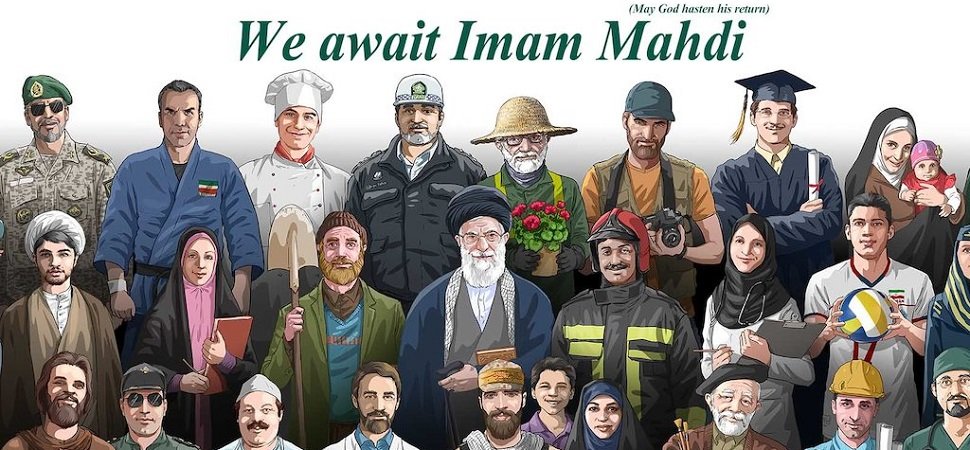


https://english.khamenei.ir/Opinions/Imam_mahdi
Imam Hussain’s Revolution for Humanity
https://english.khamenei.ir/Opinions/AshuraUprising
Who is Imam Hussain? Why did he launch an uprising?

Note: All content is free to use
Lady Fatimah Zahra's (pbuh) behavior in society is a model ...
In the Name of Allah, the Merciful, the Most Merciful
Sura 21: AL-ANBIYA (THE PROPHETS) - Juz' 17 - Translation Qarib
**************
Note: All content is free to use
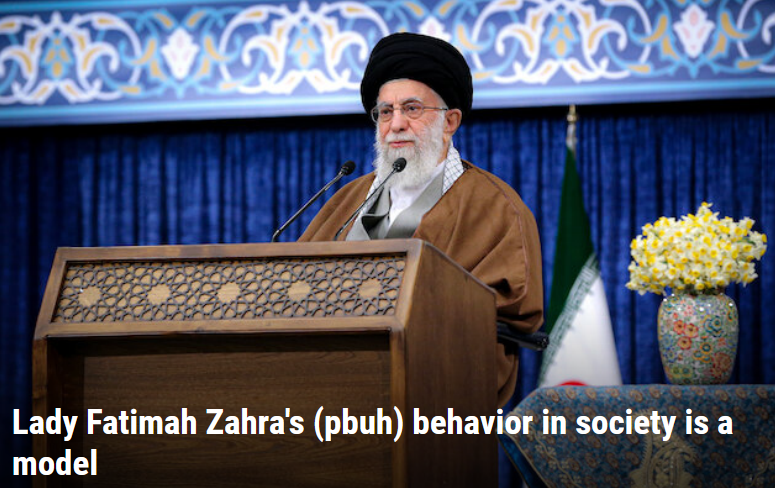
Lady Fatimah Zahra's (pbuh) behavior in society is a model
Well, the things that are well-known about this honorable
personage in the field of cultural affairs includes the issue of hijab, the
issue of standing up to falsehood in order to prove the truth, and supporting
the issue of Wilaya. These are things that can be seen and which were repeated
too. Another part of Lady Fatimah’s (pbuh) teachings was the issue of helping
others. I would like to say a few words about this social solidarity today and
about helping others. When her son asked, “Mother, why did you only pray for
others?” her answer was, “First the neighbor, then ourselves.” This is a lesson.
It reminds us of our social responsibility. Another example is that of helping
the poor, orphans, and captives as referred to in Surah Insan. The Almighty God
refers to this event as something magnificent, and 17 or 18 verses are dedicated
to it. This shows the significance of this event. “They give food, for the love
of Him, to the needy, the orphan and the prisoner, [saying,] ‘We feed you only
for the sake of Allah’” (Quran 76:8-9). It is a symbolic event. Yes, these
honorable individuals and all the members of their family endured hunger. They
helped the orphan, the poor, and the captive. This actually happened, but it is
also symbolic. Lady Fatimah (pbuh) could have asked them to go to the Mosque
instead. There was an Islamic government after all. However, the government’s
duty does not remove society’s duty. People in a society are required to truly
help one another. Various types of assistance should be offered in society,
including financial assistance, help in thinking, protecting the honor of
others, etc. This is a lesson from Lady Fatimah Zahra's teachings and her
understanding.”
Ayatollah Khamenei
Feb. 15, 2020
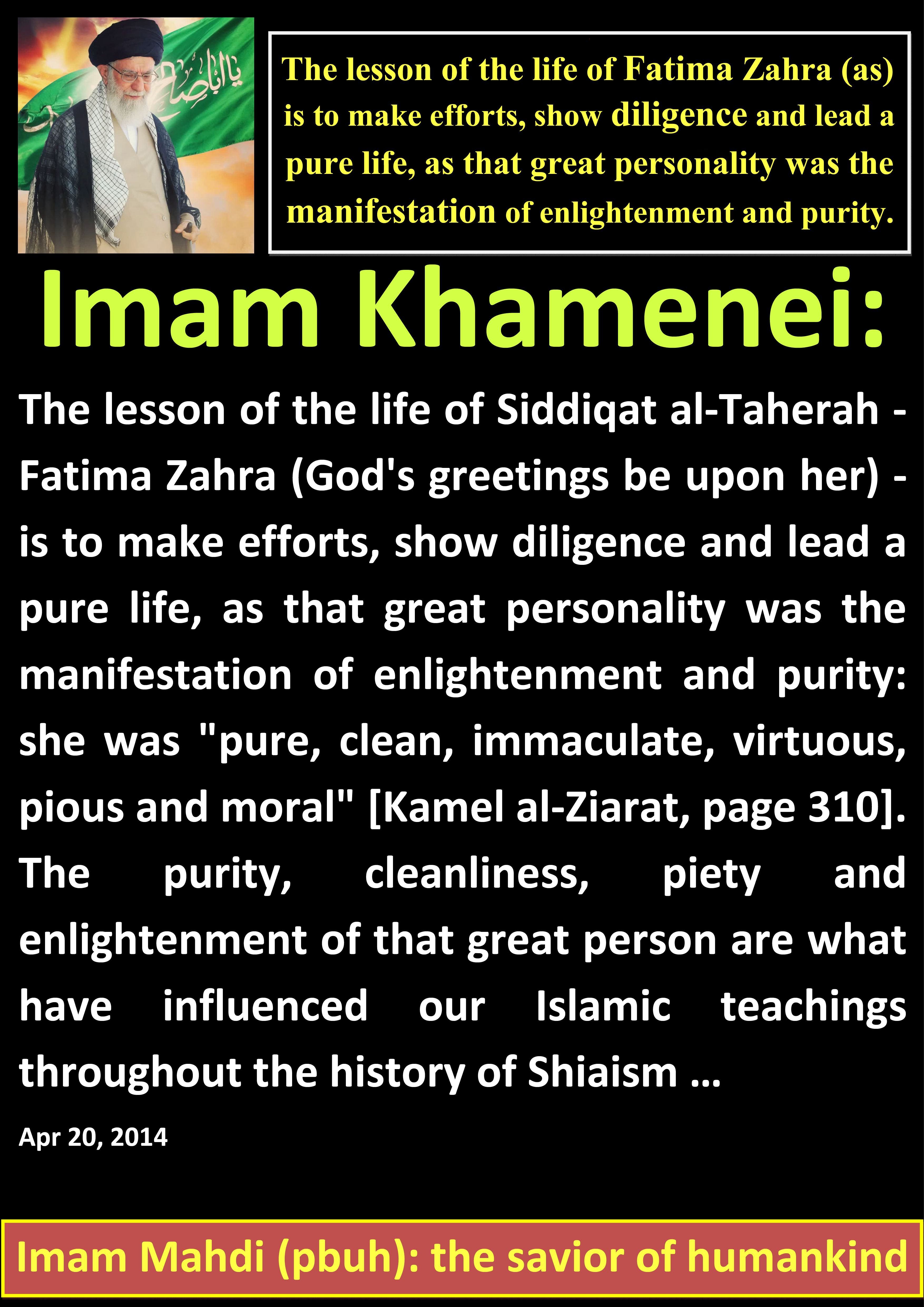
Imam Khamenei:
The lesson of the life of Siddiqat al-Taherah - Fatima Zahra (God's greetings be
upon her) - is to make efforts, show diligence and lead a pure life, as that
great personality was the manifestation of enlightenment and purity: she was
"pure, clean, immaculate, virtuous, pious and moral" [Kamel al-Ziarat, page
310]. The purity, cleanliness, piety and enlightenment of that great person are
what have influenced our Islamic teachings throughout the history of Shiaism …
Apr 20, 2014
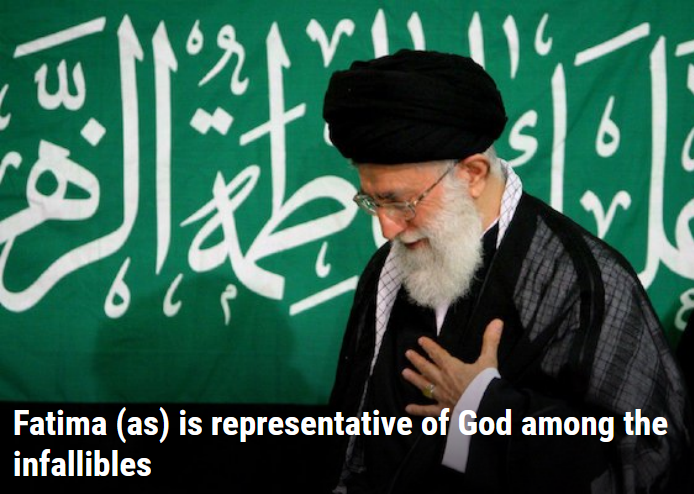
Fatima (as) is representative of God among the infallibles
Imam Khamenei:
This is based on a hadith which has been narrated by these Imams (a.s.). Fatima
Zahra (s.a.) is the representative of other divine representatives. She is the
Imam of Imams (a.s.).
In the Holy Quran, Allah the Exalted has mentioned how much women should be
respected. To Allah the Exalted, women are like men. There is no difference
between men and women in terms of spiritual and divine position. This path has
been created for human beings, not only for men or for women. Allah the Exalted
has created a woman like Fatima Zahra (s.a.) about whom Imam Askari (a.s.) or
Imam Hadi (a.s.) say, "We are the representatives of Allah among the people and
Fatima is representative of Allah among us." [Atayeb al-Bayan, volume 13, page
236]. This is based on a hadith which has been narrated by these Imams (a.s.).
Fatima Zahra (s.a.) is the representative of other divine representatives. She
is the Imam of Imams (a.s.).
Is there a greater personality? She was infallible. And such a person was a
woman. Great women such as Mary, Sara, Asiya and many other great women are the
outstanding personalities of the world. In the path of perfection and
transcendence, it is human beings which move forward. There is no difference
between men and women in terms of social rights. There is no difference between
men and women in terms of individual rights. Of course, in specific cases, women
have been given certain privileges and in a number of other cases, men have been
given certain privileges. This is based on the nature of men and women. This is
Islam. It has the most reasonable, the most dignified and the most practical
laws that one can ever imagine regarding the issue of gender. We should follow
this path. One of the major ways to do this is to raise a family, safeguard the
family environment and preserve love in the family. And this is the
responsibility of the lady of the house. May 1, 2013
Imam Khamenei:
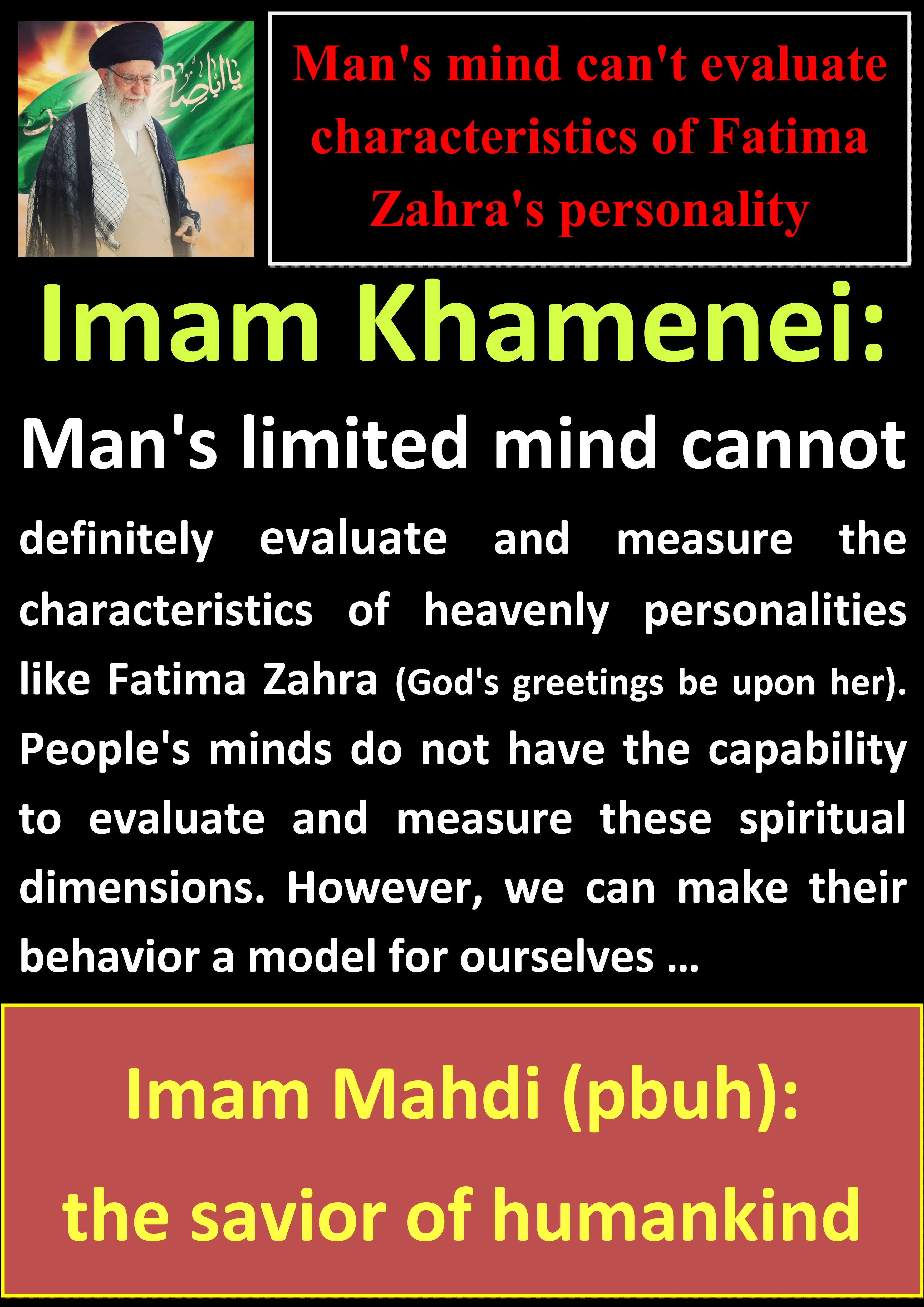
Man's limited mind cannot definitely evaluate and measure the characteristics of
heavenly personalities like Fatima Zahra (God's greetings be upon her). People's
minds do not have the capability to evaluate and measure these spiritual
dimensions. However, we can make their behavior a model for ourselves
We should make efforts. The lesson of the life of Siddiqat al-Taherah - Fatima
Zahra (God's greetings be upon her) - is to make efforts, show diligence and
lead a pure life, as that great personality was the manifestation of
enlightenment and purity: she was "pure, clean, immaculate, virtuous, pious and
moral" [Kamel al-Ziarat, page 310]. The purity, cleanliness, piety and
enlightenment of that great person are what have influenced our Islamic
teachings throughout the history of Shiaism.
Man's limited mind cannot definitely evaluate and measure the characteristics of
heavenly personalities like Fatima Zahra (God's greetings be upon her). People's
minds do not have the capability to evaluate and measure these spiritual
dimensions. However, we can make their behavior a model for ourselves. This was
also pointed out in the poems that the friends in this meeting recited.
The spiritual positions of these personalities are one thing and the patterns of
behavior which are in front of our eyes are quite another. This does not mean
that we can emulate these personalities by displaying a second version of their
patterns of behavior. This is not what it means. However, we can follow them at
least.
The Commander of the Faithful (a.s.) said, "I know that to adopt such a hard way
of life is beyond you, but at least try to be pious. Help me and be my companion
in virtue, diligence and simple living" [Nahjul Balaghah, Letter 45]. After he
describes his lifestyle - although he had a lofty position and had access to
many resources, he lived a life of piety and abstinence - he says, "You cannot
behave like me, but you can help me". With what? We can help him with piety,
avoidance of sins, effort and diligence. These are our responsibilities.
They have illustrated the goals for us, both individual and personal goals, and
social, political and general goals. In personal goals, our lofty ideal is
reaching the peak of human dignity. Everyone has been promised that they can
take this lofty and limitless flight. You youth are more capable than us. These
are the personal goals.
And our great social goals are creating a pure Islamic life and Islamic society,
one that allows individuals to move towards this goal. Such a society is
well-developed, free, independent, highly moral, united, unanimous, pious and
religious. These are the goals of Islamic society. The main social and political
goal of Islam is creating a world which is an introduction to the afterlife and
which helps individuals to achieve paradise easily. They have illustrated these
goals for us.
What is the way to achieve these goals? How can we reach these goals? As Imam
Ali (a.s.) said, we should help him to reach this goal - this is the Commander
of the Faithful's (a.s.) command. This goal is what the Commander of the
Faithful (a.s.) did in his entire life and during his efforts and jihad, which
is creating such a world for all the people throughout history. How can we help
him? We can help him with virtue, diligence and effort. Laziness is forbidden.
Idleness is forbidden. Feeling tired is forbidden. Becoming desperate is
forbidden. When this great movement is launched, you have gladdened the blessed
heart of Fatima Zahra (God's greetings be upon her) and the Commander of the
Faithful (a.s.) because they made all these efforts in order to reach this goal.
Apr 20, 2014
Imam Khamenei:
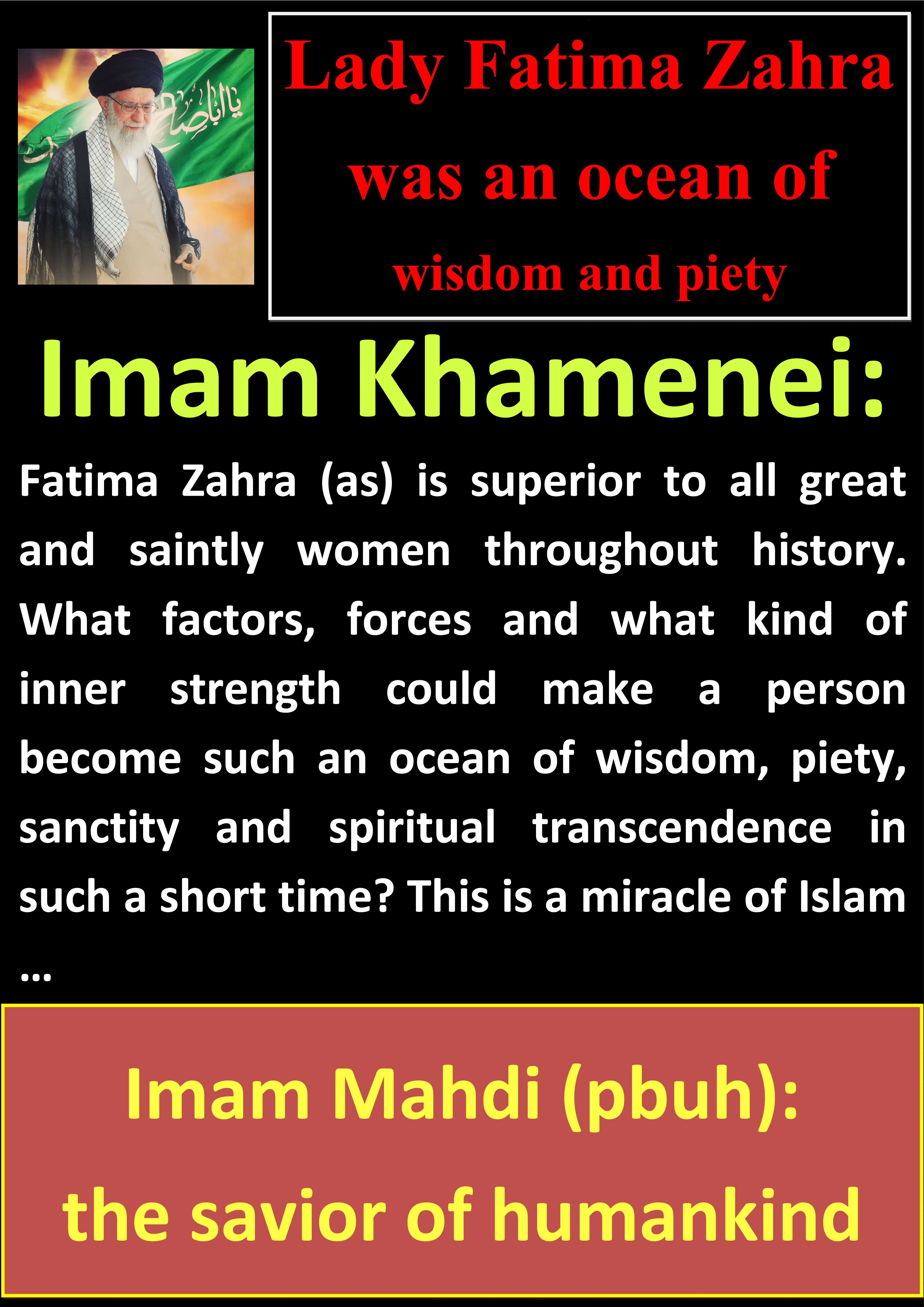
Fatima Zahra (as) is superior to all great and saintly women
throughout history. What factors, forces and what kind of inner strength could
make a person become such an ocean of wisdom, piety, sanctity and spiritual
transcendence in such a short time? This is a miracle of Islam.
The love of Fatima Zahra (s.a.), also known as Siddiqat al-Kubra, is a great
blessing for us
In her short life, Fatima Zahra (s.a.) achieved the position of the mistress of
all women. In other words, she is superior to all great and saintly women
throughout history. What factors, forces and what kind of inner strength could
make a person become such an ocean of wisdom, piety, sanctity and spiritual
transcendence in such a short time? This is a miracle of Islam.
Another point is the blessed descendants of this great person. The association
of Sura al-Kauther with Fatima Zahra (s.a.) - even if such an association had
not existed in our hadith collections - is an accurate association. There are so
many blessings that have been bestowed on the Holy Prophet's (s.w.a.) household
and on each and every one of the Imams (a.s.). The world is full of enjoyable
individual, social, worldly and otherworldly melodies which came out of the pure
throats of the Imams (a.s.). Hussein ibn Ali (a.s.), Zeinab al-Kubra (s.a.),
Imam Hassan al-Mojtaba (a.s.), Imam Sadiq (a.s.), Imam Sajjad (a.s.) and each
and every one of the Imams (a.s.) would produce these melodies. See what a great
excitement exists in the world of spirituality and in the path of guidance
because of the words of these great personalities and their lessons and
teachings. They are the children of Fatima Zahra (s.a.).
We should sincerely thank God. A number of the poems, which were recited by the
friends, contained this point. The love of Fatima Zahra (s.a.), also known as
Siddiqat al-Kubra, is a great blessing for us. Thank God we became familiar with
her. Thank God we relied on her kindness and thank God we appreciated her value.
Thank God we relied on her, asked her to help us gain an understanding of things
and expressed our love for her. These are great blessings. We should preserve
these blessings.
Leader's Speech to Panegyrists on Fatima Zahra's (s.a.) Birthday; July 5, 2007.
Imam Khamenei:
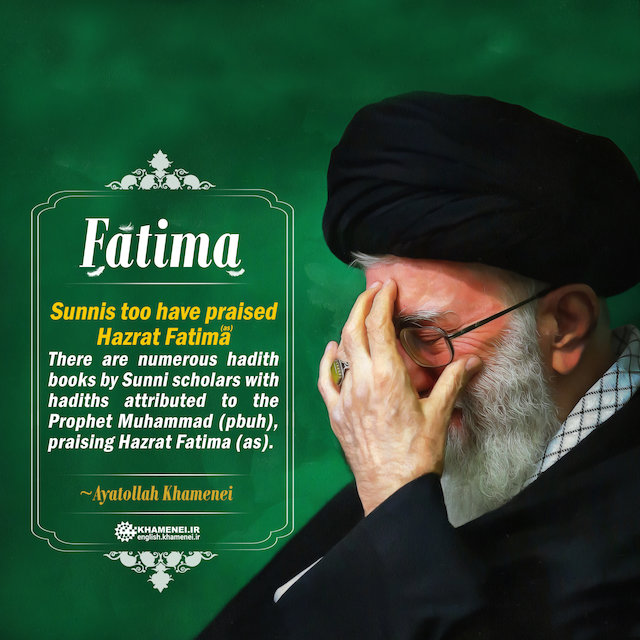
If you investigate the books written by Sunni scholars on
Hazrat Fatima (as), you will see numerous hadiths attributed to the Prophet
Muhammad (pbuh), praising Hazrat Fatima (as); or describing the behavior of the
Prophet (pbuh) towards her highness (as). Many of these hadiths were narrated by
those who were close to the Prophet (pbuh), like his wives.
About Hazrat Fatima (as), whenever we speak of her, words cannot describe her;
indeed, we do not know how to express that and what to think [in regard to
Fatima (as)].
The scope of this angelic woman's behavioral dimensions, this unique soul, this
quintessence of Prophethood and Wilaya is so vast and extensive that it is
beyond our understanding: this astonishes us completely.
As you know, living in the same era is a factor that prevents accurate
acknowledgement of great personalities. Shining stars among human societies,
while living, went mostly unrecognized by others who lived during their time,
except for a few of the prominent persons among prophets and pious
individuals--only known to a small number of the people.
However, Hazrat Fatima (as) was such a well-known personality
that, at her time, not only her father, husband, children (pbut) and her special
followers were aware of her high position, but even those who didn’t have a
close relationship with her admired her.
If you investigate the books written by Sunni scholars on Hazrat Fatima (as),
you will see numerous hadiths attributed to the Prophet Muhammad (pbuh),
praising Hazrat Fatima (as); or describing the behavior of the Prophet (pbuh)
towards her highness (as). Many of these hadiths were narrated by those who were
close to the Prophet (pbuh), like his wives.
For instance, there is a famous hadith from Aisha which reads: “I didn’t see a
person more similar to the Prophet (pbuh) than Fatima (as) who looked like him
in appearance, face, brightness, behavior and manners. When Fatima (as) came to
see the Prophet (pbuh), he got to his feet and advanced toward her
enthusiastically.”
The Arabic expression used in this hadith implies this meaning: "When Hazrat
Fatima (as) entered the room, the Prophet did not only stand up [as a sign of
respect], he stood and walked towards her." In some hadiths from the same
narrator [Aisha] we read: “He kissed Hazrat Fatima (as), took her hand, and
invited her to sit in his place.” This reveals the high status of Hazrat Fatima
(as).
What more can be said about this lady? What can be said about this magnificent
person?
November 24, 1994
Statements in a meeting with a group of panegyrists
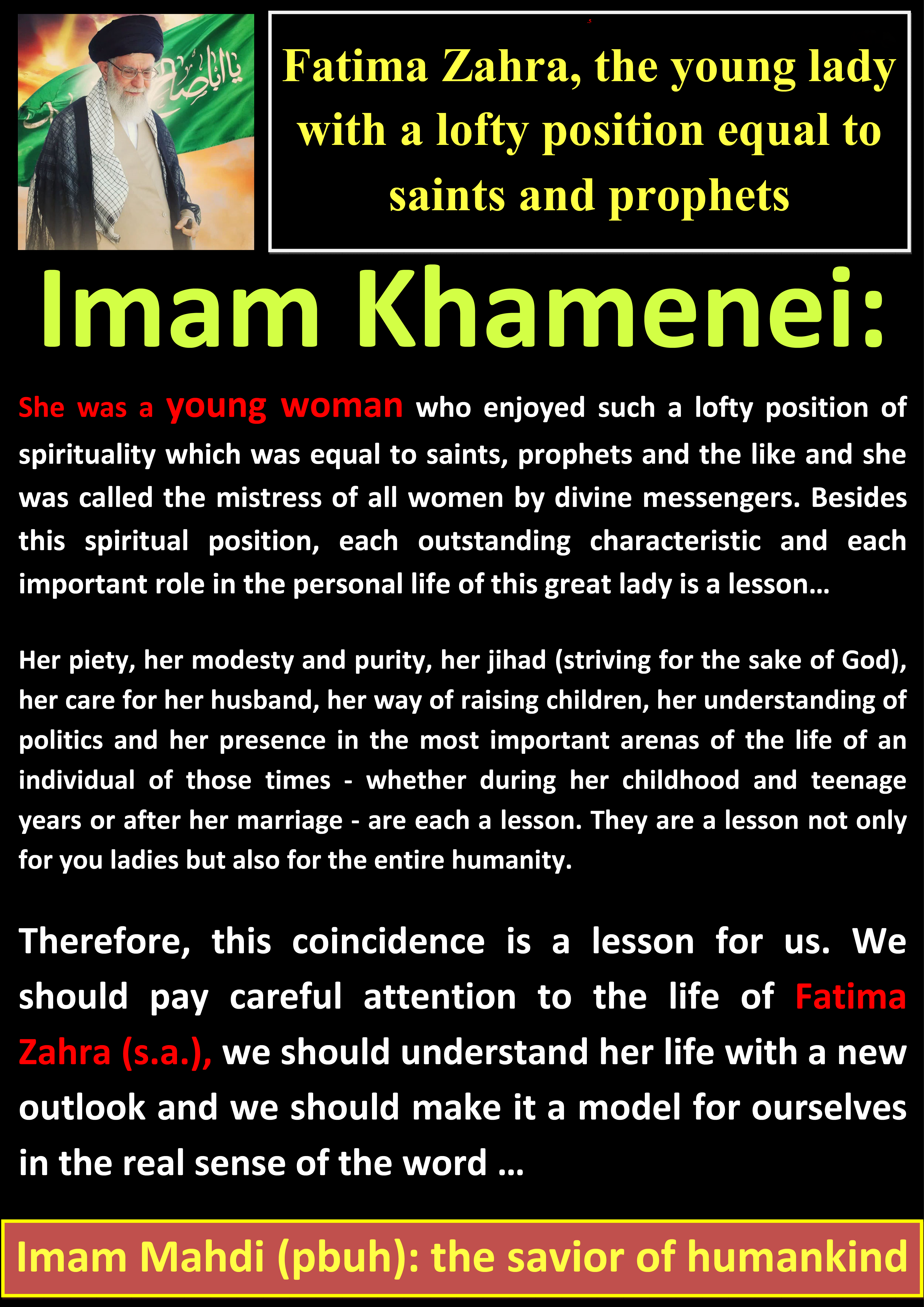
Imam Khamenei:
She was a young woman who enjoyed such a lofty position of
spirituality which was equal to saints, prophets and the like and she was called
the mistress of all women by divine messengers. Besides this spiritual position,
each outstanding characteristic and each important role in the personal life of
this great lady is a lesson.
The spiritual positions of Fatima Zahra (God's greetings be upon her) are among
the best spiritual positions which belong only to a few individuals. She was
infallible. Infallibility is particular to a few individuals who are chosen by
God and that great Hazrat - Fatima Zahra (God's greetings be upon her) - is one
of these few individuals. We should consider the fact that that Muslim woman and
that mujahide in the way of God lived only to the age of 20. Of course,
different narrations say that her age was from 18 to 25 years at the time of her
martyrdom.
She was a young woman who enjoyed such a lofty position of spirituality which
was equal to saints, prophets and the like and she was called the mistress of
all women by divine messengers. Besides this spiritual position, each
outstanding characteristic and each important role in the personal life of this
great lady is a lesson.
Her piety, her modesty and purity, her jihad (striving for the sake of God), her
care for her husband, her way of raising children, her understanding of politics
and her presence in the most important arenas of the life of an individual of
those times - whether during her childhood and teenage years or after her
marriage - are each a lesson. They are a lesson not only for you ladies but also
for the entire humanity.
Therefore, this coincidence is a lesson for us. We should pay careful attention
to the life of Fatima Zahra (s.a.), we should understand her life with a new
outlook and we should make it a model for ourselves in the real sense of the
word.
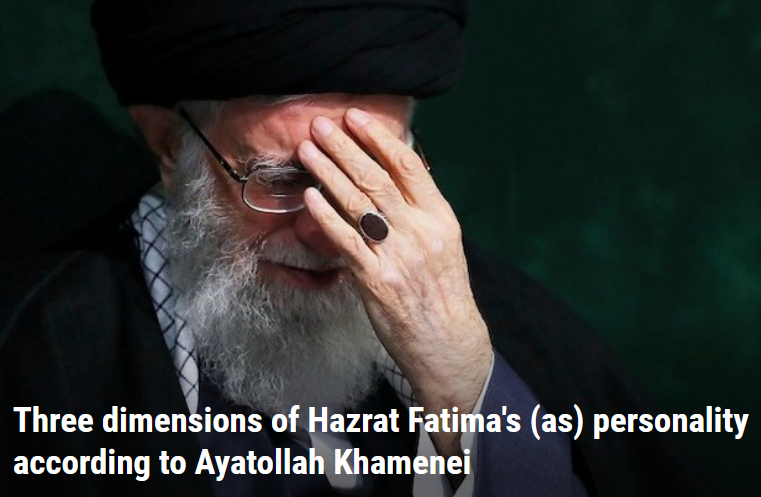
Three dimensions of Hazrat Fatima's (as) personality according to Ayatollah Khamenei
Presently, these days belong to the most superior woman who
walked on the earth, the greatest lady throughout history: Lady Fatima (as). She
was an exemplary woman, who, although lived a short life and departed earth as a
young lady, is a role model for all zealous, devout Muslim men and women, and
even non-Muslim people who are familiar with her prestigious position.
We should follow Fatima's lead. During the life of Fatima (as), there is one
point that we should consider. Here, we will not question the degree of her
spiritual position and knowledge; we are not even capable of comprehending the
spiritual greatness of Fatima (as). In fact, at the top of human spirituality
and perfection, only God knows and understands the high level of such
individuals--and others at their level. Thus, Fatima (as) is only known to her
husband, her great father Mohammad (pbuh), and her pure children. The people of
her time, of other times, and we in this era are not able to recognize the
brilliance and splendour of her spirituality. The bright light of spirituality
is not detectable by everybody’s eyes; our short-sighted and weak eyes are
unable to see the luminosity of humanity in these great personalities.
Therefore, we do not discuss the definition of Fatima’s (as) spirituality.
However, in her ordinary life, there is an important point: on the one hand, as
a Muslim woman, she perfectly performs her duties at home and behaves nicely
towards her husband and children; on the other hand, as a zealous, tireless
person she acts for her causes. In political events, shortly after the death of
her father Prophet Muhammad (PBUH), she went to the mosque, gave a speech,
expressed her position and defended her cause. Hence, she represented a
marvellous, fighting personality that is tireless, enduring, and tolerant.
The third aspect of her life reveals her as a devotee of Allah, who performs
prayers in the dark of nights, uprises for Allah, and is humble before Allah;
and, in the worshipping chamber, this young lady worships and speaks to God like
the old pious people. Combining these three dimensions is the luminous point in
the life of Fatima (as). She did not separate the three dimensions.
Some people think that those who worship God are only concerned with prayers and
worship, and cannot be involved in politics. Or, some people think that
those--women and men--who are active in politics and the arena of jihad on the
path of Allah, if a woman, she cannot perform her duties at home as a mother and
a wife; and as a man, he cannot be a good businessman, husband or father.
They think these qualities are contradictory. Whereas, in the view of Islam,
these aspects not only reveal that there are no contradictions, but they are
also helpful towards achieving the perfect human personality.
Ayatollah Khamenei, December 13, 1989
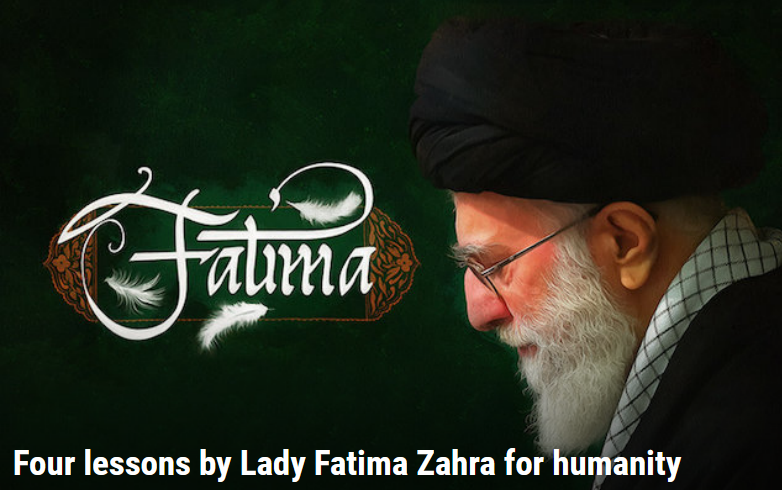
Four lessons by Lady Fatima Zahra for humanity
Imam Khamenei:
We should make greater efforts [towards emulating Fatima Zahra
(pbuh)]. Lessons to be learned from the life of Siddiqat al-Taherah, Fatima
Zahra (pbuh), involve making great efforts, showing diligence, and leading a
pure life;--just as that great personality, the manifestation of enlightenment
and purity, led her life: she was "pure, immaculate, virtuous, and pious,"
[Kamel al-Ziarat, page 310]. Traits of purity, piety and enlightenment of such
an exceptional person are what have influenced our Islamic teachings throughout
the history of Shi’a Islam.
Apr 20, 2014
That is to say, in her short life, Fatima Zahra (pbuh)
achieved the position as the primary woman of all females. In other words, she
is superior to all great and saintly women throughout history. What factors,
forces, and what kind of inner strength could lead one person to become such an
ocean of wisdom, piety, sanctity and spiritual transcendence in such a short
time? This is a miracle of Islam.
Another pivotal matter is in regards to the blessed descendants of this great
person [Lady Fatima Zahra (pbuh)]. The association of Sura al-Kauther with
Fatima Zahra (pbuh)--even if such an association had not existed in our
collection of hadith--is an accurate association. There are so many blessings
that have been bestowed upon the Holy Prophet's (pbuh) household and on each and
every one of the Imams (pbuh). The world is full of enjoyable individual,
social, worldly and otherworldly melodies, which rose from the pure lungs of the
Imams (pbuh). Hussain ibn Ali (pbuh), Zeinab al-Kubra (pbuh), Imam Hassan
al-Mojtaba (pbuh), Imam Sadiq (pbuh), Imam Sajjad (pbuh), each and every one of
the Imams (pbuh) would produce these melodies. See what great excitement exists
in the world of spirituality and on the path of guidance because of the words of
these great personalities and their lessons and teachings. They are the children
of Fatima Zahra (pbuh).
Jul 5, 2007
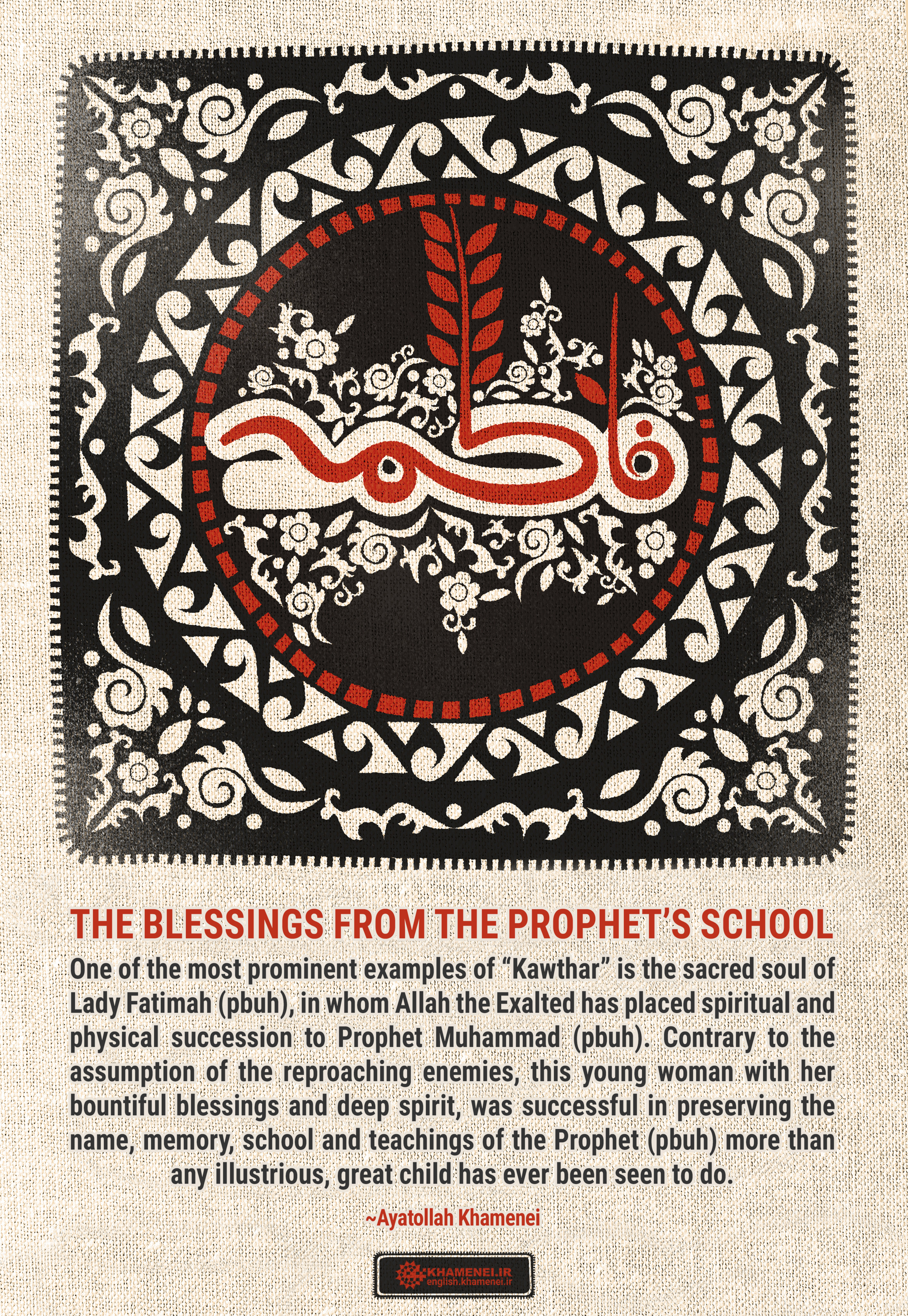
One of the most prominent examples of “Kawthar” is the sacred
soul of Lady Fatimah (pbuh), in whom Allah the Exalted has placed spiritual and
physical succession to Prophet Muhammad (pbuh). Contrary to the assumption of
the reproaching enemies, this young woman with her bountiful blessings and deep
spirit, was successful in preserving the name, memory, school and teachings of
the Prophet (pbuh) more than any illustrious, great child has ever been seen to
do.
Imam Khamenei, October 1, 1999

Sources:
Please click on the links below or any of the images above to view the
full text of Imam Khamenei's statements and access more...
https://english.khamenei.ir/news/9425/Lady-Fatimah-Zahra-s-pbuh-behavior-in-society-is-a-model
https://english.khamenei.ir/news/4626/Lady-Fatima-Zahra-was-the-manifestation-of-enlightenment-and
https://english.khamenei.ir/news/4629/Fatima-as-is-representative-of-God-among-the-infallibles
https://english.khamenei.ir/news/5485/Three-dimensions-of-Hazrat-Fatima-s-as-personality-according
https://english.khamenei.ir/news/5439/Four-lessons-by-Lady-Fatima-Zahra-for-humanity
https://english.khamenei.ir/news/7333/The-blessings-from-the-Prophet-s-school
Links:
https://english.khamenei.ir/Opinions/Imam_mahdi
Imam Hussain’s Revolution for Humanity
https://english.khamenei.ir/Opinions/AshuraUprising
Who is Imam Hussain? Why did he launch an uprising?
Note: All content is free to use
Lady Zeinab, a role model for all great women and men around the globe ...
In the Name of Allah, the Merciful, the Most Merciful
Sura 21: AL-ANBIYA (THE PROPHETS) - Juz' 17 - Translation Qarib
**************
Note: All content is free to use
_9vgp.png)
Imam Khamenei:
Lady Zainab is a prominent lady in the history of humanity, not just in the
history of Islam.
This great lady is a role model for nurses.
Some jobs deal with the beauties in life, but your job deals with sufferings and
pain. Honouring nurses equals appreciation of religious values and rare human
virtues, from compassion and sympathy to patience in the face of pain and
irritability. Our society today needs empathy, commitment, patience and
endurance ...
_wa0y.png)
"I saw nothing but beauty": Zeinab al-Kubra (sa)
On the day of Ashura Zeinab al-Kubra watched many of her dear ones go to the battlefield to get martyred. She watched Hussein ibn Ali (a.s.), Abbas, Ali Akbar, Qasem, her children, and other dear ones go to the battlefield. After they were martyred, she went through all those pains: The invasion of the enemy, disrespect, and the responsibility to take care of the surviving children and women. Is it possible to compare the enormity of this tragedy with physical pain? But when she was faced with these difficulties, Zeinab al-Kubra did not tell God to save her. She did not say, "O my Lord, save me." ...While the shredded body of her brother lay in front of her eyes, tells God, "O God, accept this sacrifice from us." When she was asked to describe what she had seen, she replied, "I did not see anything but beauty." All those tragedies were beautiful to Zeinab al-Kubra because they were from and for God - because they were supposed to promote the word of God.
_8kcx.png)
Imam Khamenei:
Lady Zeinab (as) is a perfect example of a Muslim woman: a role model for
women's education, which Islam presents before the eyes of the world.
Lady Zeinab represents a multi-dimensional personality: she is wise and
well-educated with great knowledge; a distinguished person; anyone who meets
her, feels humble before the greatness of her wise soul and her insight …
Lady Zeinab has interwoven a woman’s enthusiastic affection with a believer’s
greatness, stability, and sedateness of heart; and the clear, articulate
language of a fighter, (Mujahed) on the path of God, and limpid insight that
pours out of her mouth and heart, astonishes listeners and spectators …
Those who have not known the slightest degree of religion or spirituality can
never comprehend such greatness in a woman.
Those who identify women as ornaments with makeup, as ignorant, and as toys for
men's play, can by no means comprehend the basis of a woman's identity within
the logic and viewpoint of Islam …
Ayatollah Khamenei, June 15, 2005
_8ccn.png)
Imam Khamenei:
Zeinab al-Kubra (s.a.) presented a deep analysis of her society's pathologies.
She spoke firmly and eloquently in that difficult situation. It was not the case
that she had an audience sitting in front of her and listening in silence. She
was not speaking the way an orator would speak to his audience. She was
surrounded by the enemies, holding spears in their hands. There were also some
ordinary people there - the same people who gave up Moslem to Ibn Ziad, the same
people who wrote letters to Imam Hussein and then broke their allegiance to him,
the same people who hid in their homes exactly when they were supposed to stand
up to Ibn Ziad. Among the people there were also some individuals who were not
courageous enough to do what they should have done, and they were watching Imam
Ali's daughter in tears on that day. Zeinab al-Kubra (s.a.) was faced with this
motley and unreliable crowd, yet she spoke in a firm manner. She was an
exemplary woman in history. Such women cannot be considered weak. This faithful
feminine nature may reveal itself in difficult conditions. She is a role model
for all great men and women in the world. She presented a deep analysis of the
problems facing the revolution started by the Holy Prophet (s.w.a.) and Imam Ali
(a.s.). She said, "You could not distinguish between right and wrong in the
fitna. You were unable to fulfill your duty. As a result, they severed the head
of the Holy Prophet's (s.w.a.) grandson and put it on a spear." We can
understand the greatness of her character when we consider such things.
This is a warning to our women to identify their role. They should understand
the greatness of being a woman by combining feminine modesty and morality with
pious dignity. That is how faithful Muslim women are…
Statements made during a meeting with Exemplary Nurses; April 21, 2010.
_744r.png)
********************
_enlt.png)
Zainab bint Ali (as): The woman who saved Islam
A part of the sermon Hadrat Zainab (as) gave with utmost bravery in the gathering of Yazid son of Muawiya in Syria shook his majlis (gathering) and still echoes through time and space:
“By Allah (SWT), you cannot remove us from the minds (of people), and you cannot fade our message. You will never reach our glory and can never wash the stain of this crime from your hands. Your decisions will not be stable, your period of ruling will be short, and your population will scatter. In that day, a voice will shout: "Indeed may the curse of Allah (SWT) be upon the oppressors..."
Righteous people should not at all be affected by the harsh circumstances they undergo, that is exactly what Hadrat Zeinab (as) stressed in her speeches. She reiterated they (AhlulBayt) are the people of strong presence, strength, confidence and faith despite the drastic and harsh calamity that fell upon her and her family. The prophet's household turned this threat into an opportunity and made use of the entire situation and the circumstances they went through lead by the courageous Hadrat Zainab (as).
A model of defiance against oppression and injustice. A woman of patience and endurance. There was no act of worship greater than continuing the rising of her brother, delivering fiery sermons in the path of Kufa and Syria, and awakening ignorant people who were deceived by poisonous propaganda of Yazid son of Muawiya and martyred Imam Hussain (as) as a man who was out of Islam. Her sermons created a movement in Kufa and Damascus which shook the bases of Yazid's kingdom and even Yazid's son refused to replace his father as the king, and after a while, quitted the government while disgracing the oppressing dynasty of Umayyads …
In her lifetime, Hadrat Zainab (as) had endured immense pain from witnessing her loved ones martyred before her eyes, but she never objected to the destiny decreed upon her by Allah. The completeness of her submission is monumental. The grief she expressed was an outpouring of her incredible humanity.
Hadrat Zainab’s role was exemplary. It showed how bold Muslim women were and how they played a key role in consolidating Islamic teachings. Today, despite so much progress and the spread of education, so many Muslim women are suppressed. In some alleged Muslim societies, a woman’s voice is banned from even being heard in public; and here was Zainab (as) from the Imam’s family who became a public speaker to save Islamic values. The leadership of the family fell to Hadrat Zainab after Karbala, and she proved to be more than what was expected of her.
Today, women have to learn much from her example and leadership qualities. Her public role in the battle of Karbala has much to teach us both Muslim men and women. The only way for women in general and Muslim woman in particular could pay respects to her sacrifice is by being inspired by her life to be courageous in the face of tyranny, patient in times of trouble, and submissive to the will of God. Hadrat Zainab bint Ali (as) the role model for the righteous will forever teach us all that when we undergo countless trials in our lives, we should see nothing but beauty in them.
by Marwa Osman
_i71h.png)
Imam Khamenei:
The great lady of Karbala (Hazrat Zeinab Kobra (peace be upon her)) has proved
to all humanity and history that the "woman", despite all the short-sighted
efforts of the past and present, including the authoritarian Westerners in the
humiliation of woman, can be a vast ocean of patience, and a zenith of wisdom
and prudence …
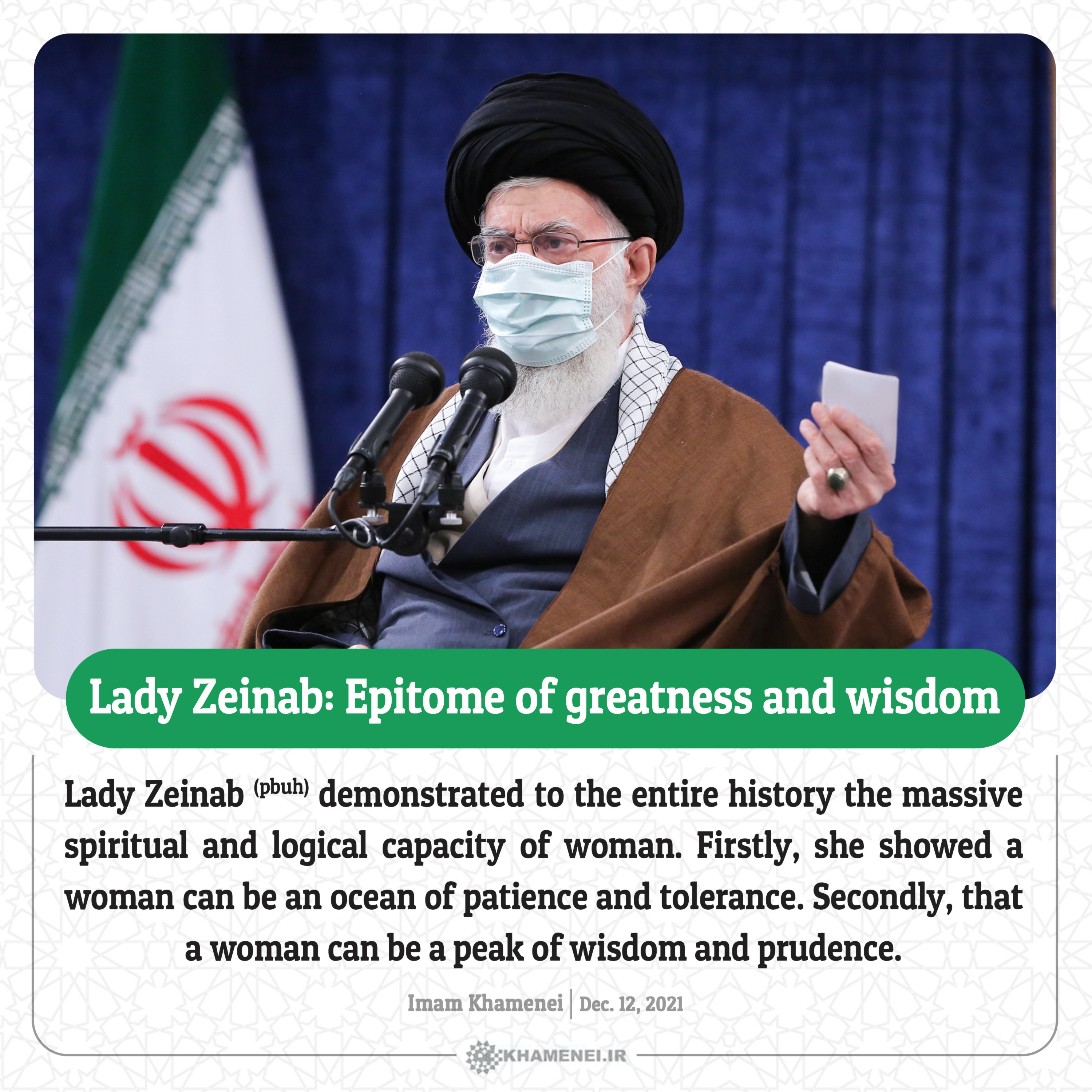
Imam Khamenei:
Lady Zeinab: Epitome of greatness and wisdom
Lady Zeinab (pbuh) demonstrated to the entire history the massive spiritual and logical capacity of woman. Firstly, she showed a woman can be an ocean of patience and tolerance. Secondly, that a woman can be a peak of wisdom and prudence.
_cf2v.png)
Lady Zeinab (pbuh): Peak of patience and power
_6j62.png)
*******************
_pml8.png)
As long as the light of Hazrat Khadijah al-Kubra (s.a.) and Hazrat Fatima Zahra
(s.a.) and Hazrat Zainab (s.a.) continues to shine, the old and new anti-woman
plots will not bear any results. Not only did thousands of Iranian women with
Karbala-like spirit stand up against the apparent cruelties against women but
they also revealed the true nature of modern cruelties to women …
The lionesses of the Islamic Revolution of Iran proved that there is a third
paradigm which is neither eastern nor western. Muslim Iranian women opened to
the women of the world, a new chapter in history that proved one can be a woman,
maintain her chastity, modestly dressed and noble, and yet actively be at the
center of the events …
According to Islamic ideals, there is a paradigm for Muslim women to follow.
This model is complete: an Islamic woman is a woman who possesses faith; she
embraces "ifaff" [chastity, virtue]; she manages the most important elements of
human education; she is influential in society; she can grow, scientifically and
spiritually; she is the doyenne of the very important foundation of family and a
great source of comfort for man: all of these qualities exist, as well as other
female qualities such as delicacy, softness of heart, and preparedness for
receiving the divine light. These qualities make up the paradigm for the Muslim
woman. These are the very characteristics that the Holy Prophet (PBUH) applied
to various statements while praising Fatima Zahra, Khadija al-Kubra (God's
greeting be upon them), and women in general ...
_f4g.png)
During the calamities of Karbala, Zeinab (as) didn't say O' God save me! She said: Accept from us!
Imam Khamenei:
The permanence of Islam, the divine path and continuation of this path by God's
servants are based upon Hussain ibn Ali's (as) and Zeinab al-Kubra's (pbuh)
actions. That is to say, as a result of the great patience, resistance, and
endurance of hardships, you see that religious values have gained a lot of
ground in the modern world. All these human values, which are consistent with
human nature, in different schools of thought, are rooted in religious values.
These values have been promoted by religion. That is the nature of efforts for a
divine cause … Feb 8, 2010
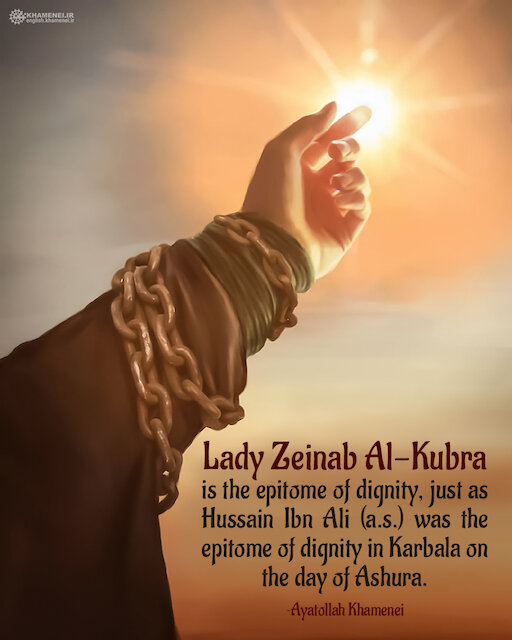
Lady Zeinab: The epitome of dignity ...
_mu1b.png)
The real empowered woman, Lady Zeinab (pbuh) ...
_31jz.png)
Lady Zeinab, a role model for all great women and men around the globe ...
Sources:
Please click on the links below or any of the images above to view the
full text of Imam Khamenei's statements and access more...
https://english.khamenei.ir/news/5180/I-saw-nothing-but-beauty-Zeinab-al-Kubra-sa
https://english.khamenei.ir/news/5419/Hazrat-Zeinab-as-proved-a-woman-can-play-a-role-in-society
https://english.khamenei.ir/news/4376/Zainab-bint-Ali-as-The-woman-who-saved-Islam
https://english.khamenei.ir/news/8784/Lady-Zeinab-Epitome-of-greatness-and-wisdom
https://english.khamenei.ir/news/9968/Lady-Zeinab-pbuh-Peak-of-patience-and-power
https://english.khamenei.ir/news/5794/Why-is-Islam-s-outlook-on-women-preferred-over-the-Capitalist
https://english.khamenei.ir/news/6539/Lady-Zeinab-The-epitome-of-dignity
https://english.khamenei.ir/news/11233/The-real-empowered-woman-Lady-Zeinab-pbuh
https://english.khamenei.ir/news/3677/Lady-Zeinab-a-role-model-for-all-great-women-and-men-around
Links:
https://english.khamenei.ir/Opinions/Imam_mahdi
Imam Hussain’s Revolution for Humanity
https://english.khamenei.ir/Opinions/AshuraUprising
Who is Imam Hussain? Why did he launch an uprising?
_fffd.png)
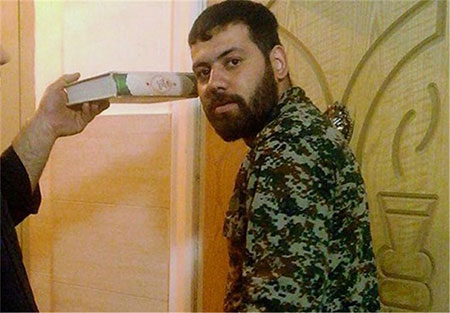
Martyr Majid Ghorban Khani was born in 1990 in Yaft Abad (name of a region in Tehran). He went to Syria in order to defend from Hazrat Zainab(SA) holy shrine. Finally he and his friends such as; Martyr Mostafa Chegini, Martyr Morteza Karimi and Martyr Mohammad Azhand were martyred in the defense of Hazrat Zainab(SA) holy shrine in Khan Tuman (Syria) in 2016.
https://navideshahed.com/en/news/385719/martyr-majid-ghorbankhanis-pure-body-entered-mashhad
Be sincere and honest with each other so that your life may be joyful
Note: All content is free to use